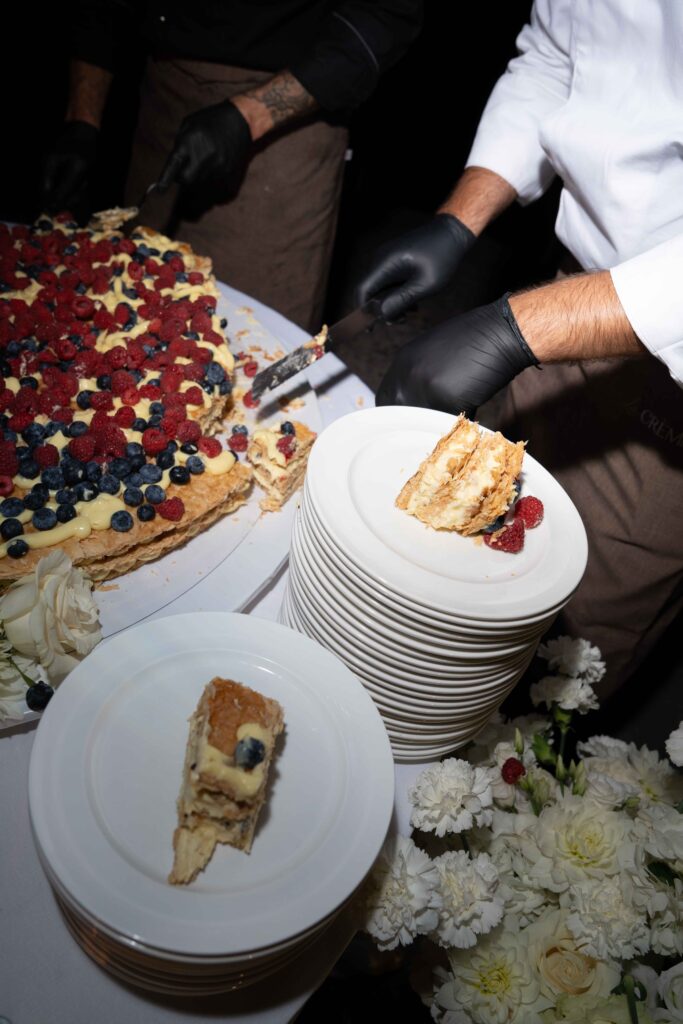
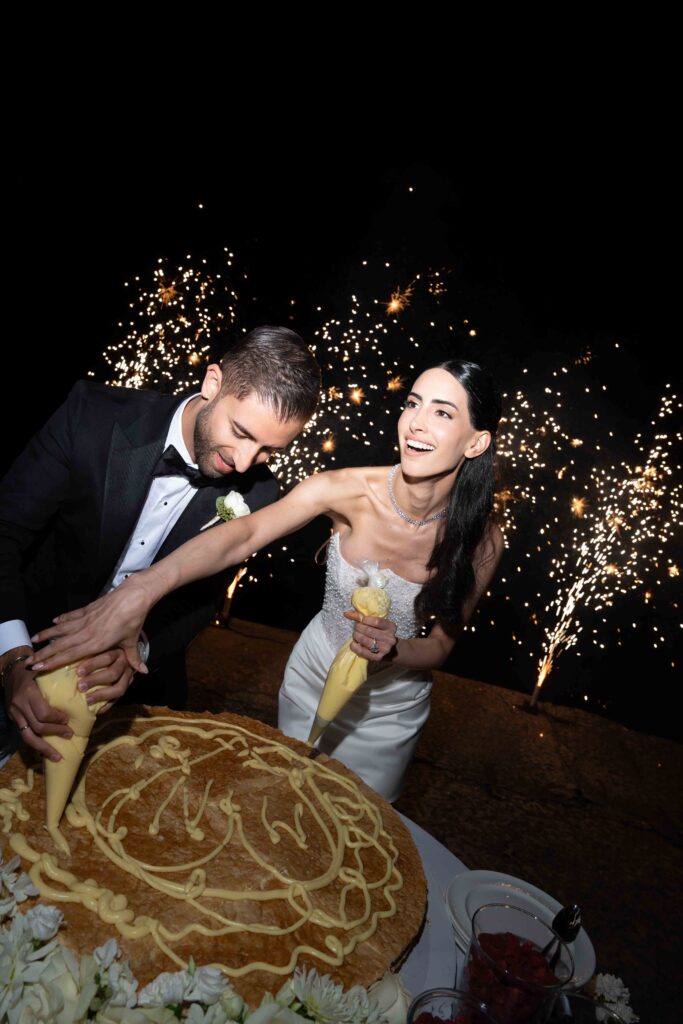
Getting married in Italy is the epitome of a dream wedding for many couples. Hardly any other country combines so many crucial factors at once: the light, which changes throughout the day like in no other country in Europe. The architecture, which has grown over centuries and requires no staging. The cuisine, which makes even a simple dinner an experience. And a way of life – Dolce Vita is not a cliché, but a tangible reality – which is transferred to every wedding that takes place here.
Those who seriously consider getting married in Italy will quickly realise: the decision to choose Italy is just the first step. The second, crucial step is selecting the right region. This is because Italy is not a homogenous country – it is a collection of entirely different worlds. Tuscany feels different to Lake Como. Puglia feels different to the Amalfi Coast. Rome feels different to Venice. Each region brings its own aesthetic, its own atmosphere, and its own type of wedding.
This guide is aimed at couples seriously planning a wedding in Italy. It covers all relevant regions and locations, provides realistic cost guidance, explains the best times of year and answers the questions that hardly anyone asks honestly online. Not as a source of inspiration, but as a practical planning companion – from the perspective of a photographer who regularly covers weddings in Italy and knows what really works.
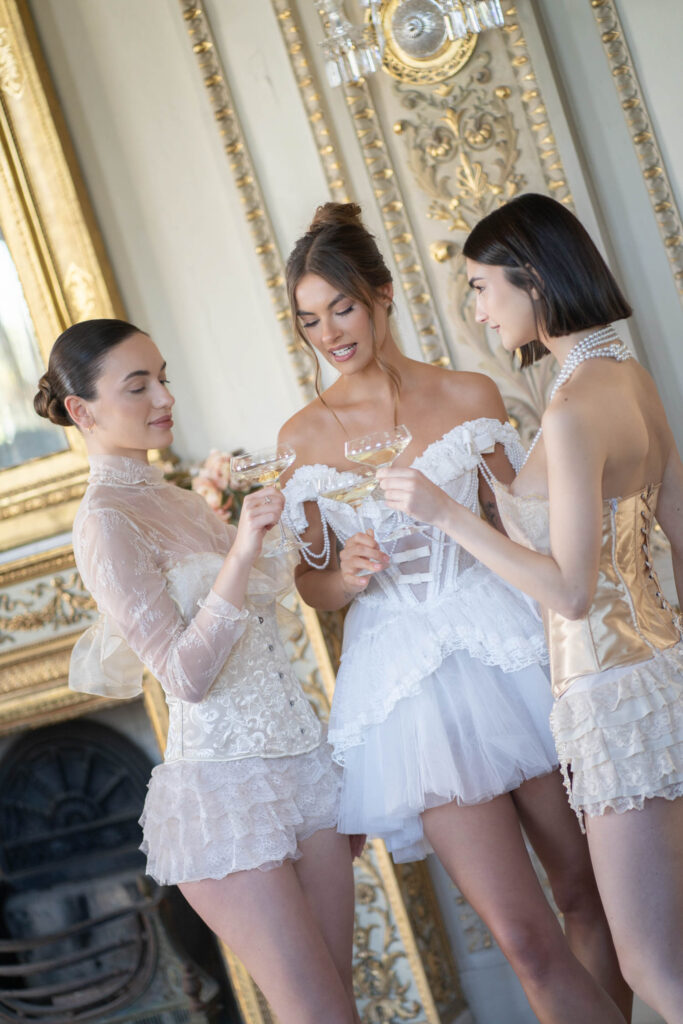


Why marriage in Italy is a special decision
Getting married in Italy doesn’t mean choosing a beautiful country. It means choosing a type of wedding experience – one steeped in light, history and atmosphere, without having to fight for it or stage it. In Italy, this quality is simply present. It is in the villas, in the masserias, on the lake shores, in the way the evening light falls on old stone facades.
What sets getting married in Italy apart from other destinations can be reduced to a few key, but crucial, factors. Light is the most important of these. Italian light – particularly in the hours before sunset – has a quality that is almost impossible to replicate photographically. It is warm, deep, and soft all at the same time. It makes skin tones more natural, shadows softer, and spaces deeper. A wedding in Italy looks good not because it is well-planned. It looks good because the light plays its part.
Added to this is the architecture. Getting married in Italy means celebrating in buildings that are centuries old and carry that history. Not a backdrop built for weddings – but places that have grown over generations, and therefore have a depth that cannot be bought. A villa on Lake Como, a masseria in Apulia, a winery in Tuscany – these are all places with their own identity, which give every wedding a level of meaning that extends far beyond the day itself.
And finally, the culinary aspect. Getting married in Italy means serving your guests a dinner that will impress even the most discerning palates. The regional cuisine of Italy is so rich and diverse that a wedding menu doesn't need to be planned here – it almost creates itself when you work with the right local producers.
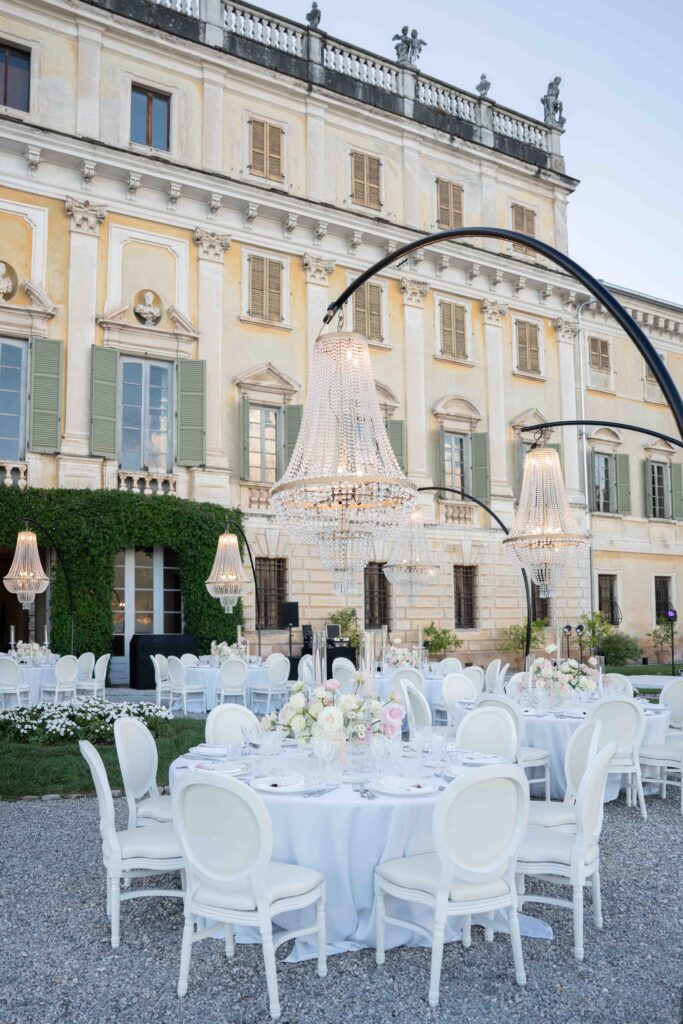
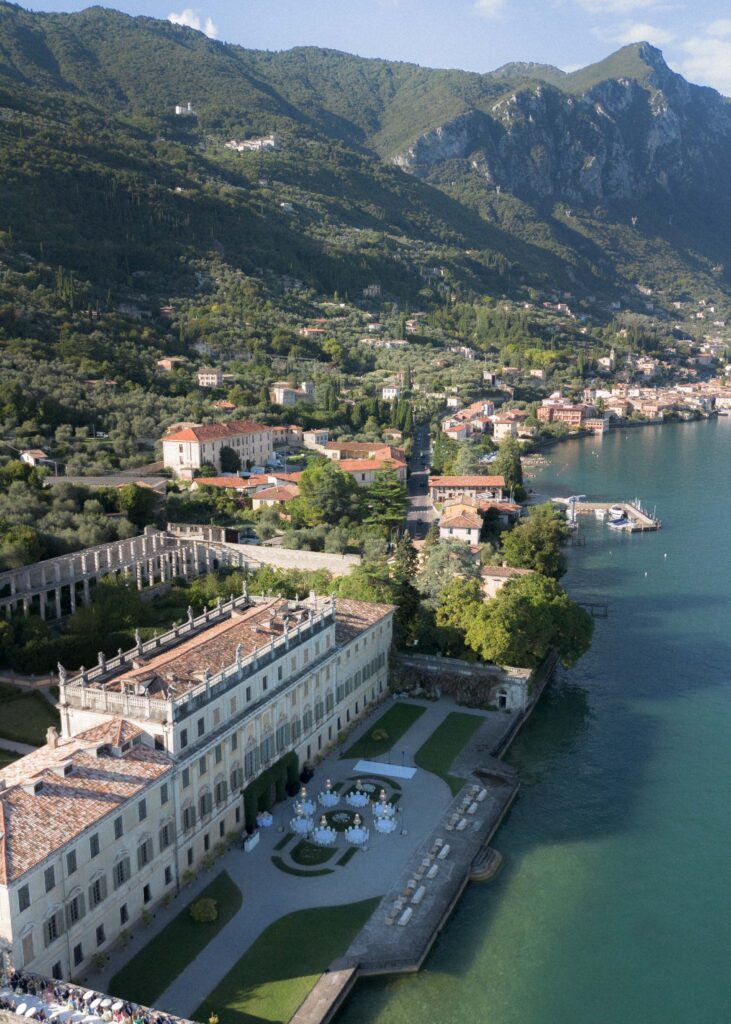

What makes Italy so unique as a wedding destination
There are wedding destinations that impress through a single quality. Switzerland through precision and discretion. France through elegance and grandeur. Austria through history and alpine drama. Getting married in Italy impresses through the sum of all qualities simultaneously — light, architecture, cuisine, lifestyle — and through the fact that these qualities seem natural in Italy rather than staged.
What makes a wedding in Italy special is the ease. Not the ease of carelessness, but the ease of self-evidence. Long tables outdoors, local wine, candles burning down slowly while guests stay well into the night — this happens in Italy because the setting allows for it. Because the evenings are warm. Because the food is good. Because the place invites you to stay.
This sense of naturalness is what draws couples from all over the world to Italy. They aren't looking for a wedding that impresses; they're looking for a wedding that feels right. And in Italy, with the right choices, that's exactly what you get.
Who marriage in Italy is really suited for — and for whom it isn't
Getting married in Italy isn't the right choice for every couple. This clarity is part of an honest guide.
Italy as a wedding destination is perfectly suited to couples who value atmosphere. They understand that a wedding in Italy isn't created through maximum decoration, but through the right combination of location, light, and sequence of events. They are prepared to embrace the intrinsic logic of the venue – instead of turning the venue into a backdrop for their own ideas.
It also suits couples who appreciate culinary quality and understand that an exceptional dinner is a standalone part of the wedding – not just sustenance between the ceremony and the party.
Marrying in Italy is not ideal for couples seeking maximum planning certainty. Italy is a country where things sometimes go differently than planned – later, more improvisational, less precise than in Switzerland or Germany. Those who cannot accept this will be happier in other countries. Those who understand it as part of the character will love Italy.
The most important regions for a wedding in Italy – an overview
Getting married in Italy doesn't mean choosing a country – it means choosing a region. And this choice is simultaneously a decision for a specific aesthetic, a specific atmosphere, and a specific type of wedding. Anyone planning to get married in Italy should make this decision early on – it determines everything else.
Tuscany — warm light, cypress trees and timeless elegance
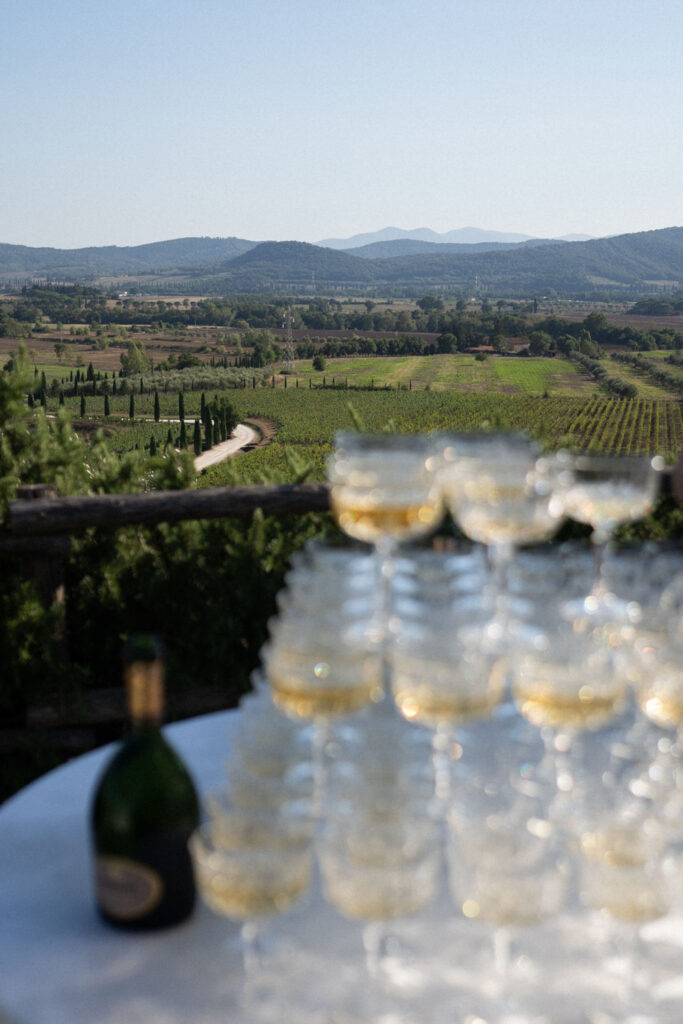
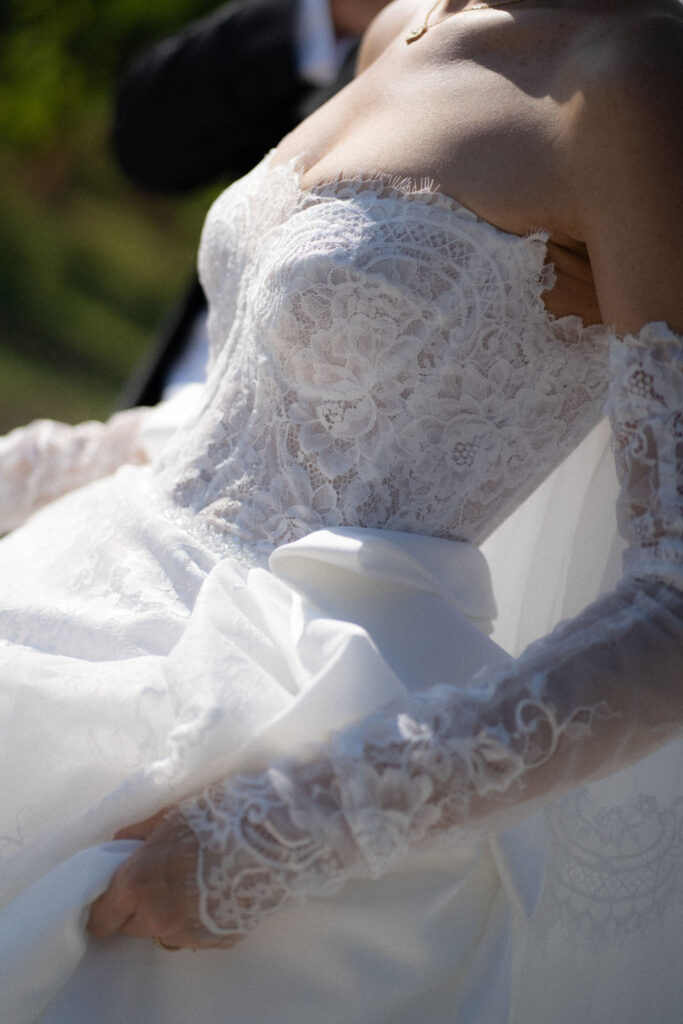
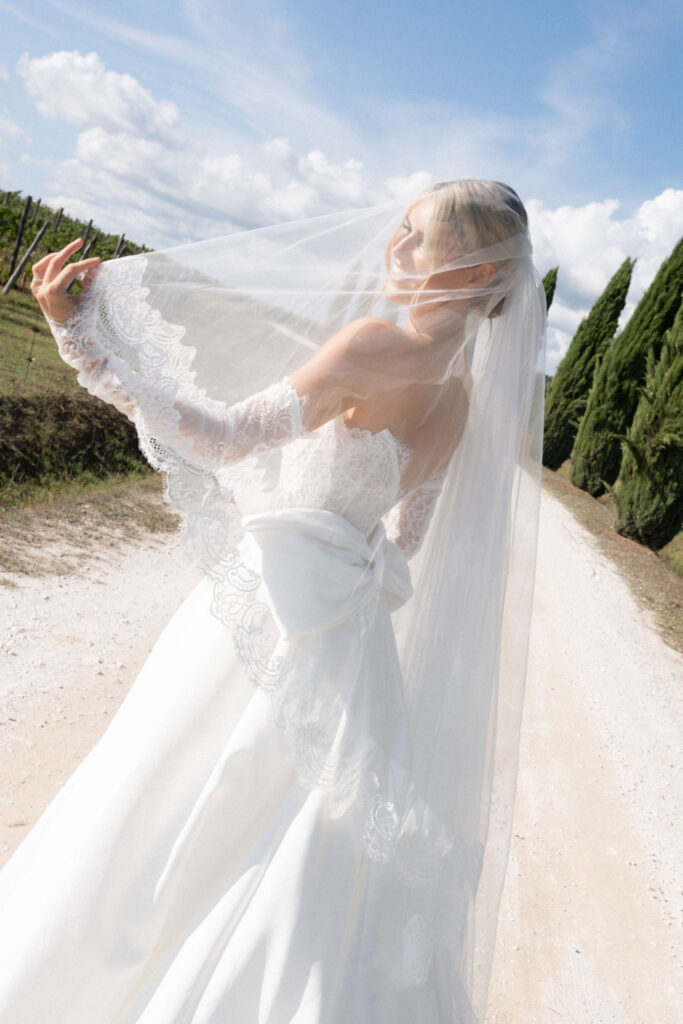

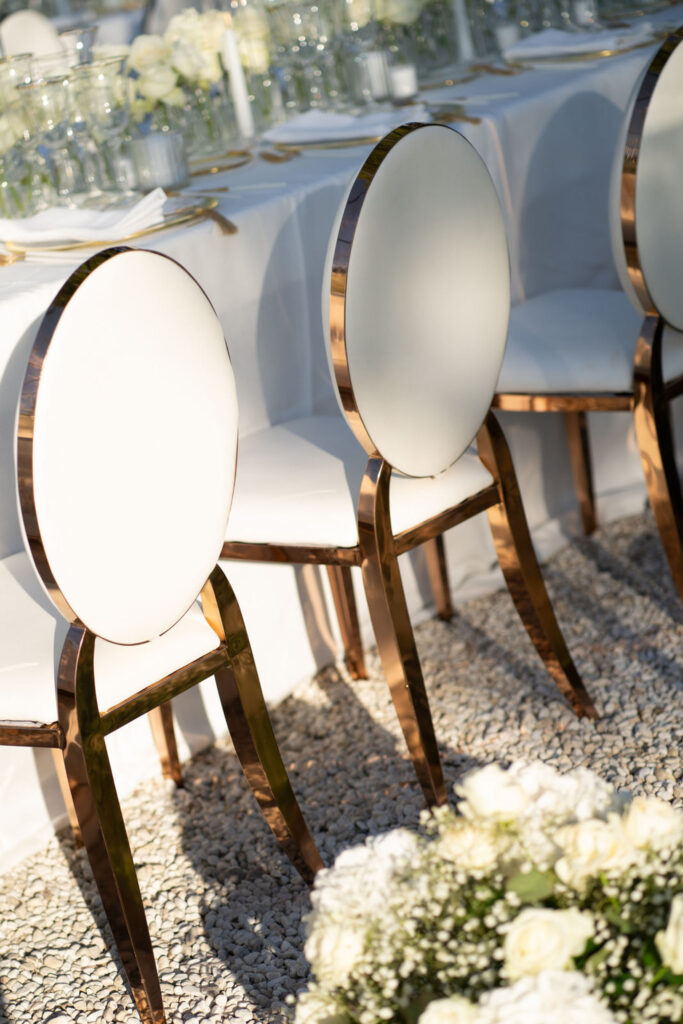

Tuscany is the best-known and most sought-after region for a wedding in Italy. Rolling hills, cypress trees, olive groves, wineries with centuries of history, and a light that has an almost unreal warmth, especially in spring and autumn — Tuscany evokes imagery that is recognised and loved worldwide.
Getting married in Italy, in Tuscany, means: classic elegance, warm colours, long tables under the open sky, wines from Chianti or Val d’Orcia. Tuscany is the most versatile region in Italy for a wedding — it works just as well for small, intimate gatherings as for large celebrations, for classic-elegant concepts as for modern, minimalist approaches.
What to consider for a Tuscan wedding: This region is very well-known – and therefore highly sought after. The best venues are often booked up two years in advance. Anyone planning to get married in Tuscany, Italy, needs to start early. The popularity also has a positive side: the network of experienced service providers is stronger in Tuscany than in any other region of Italy.
Lake Como — iconic elegance and clear imagery
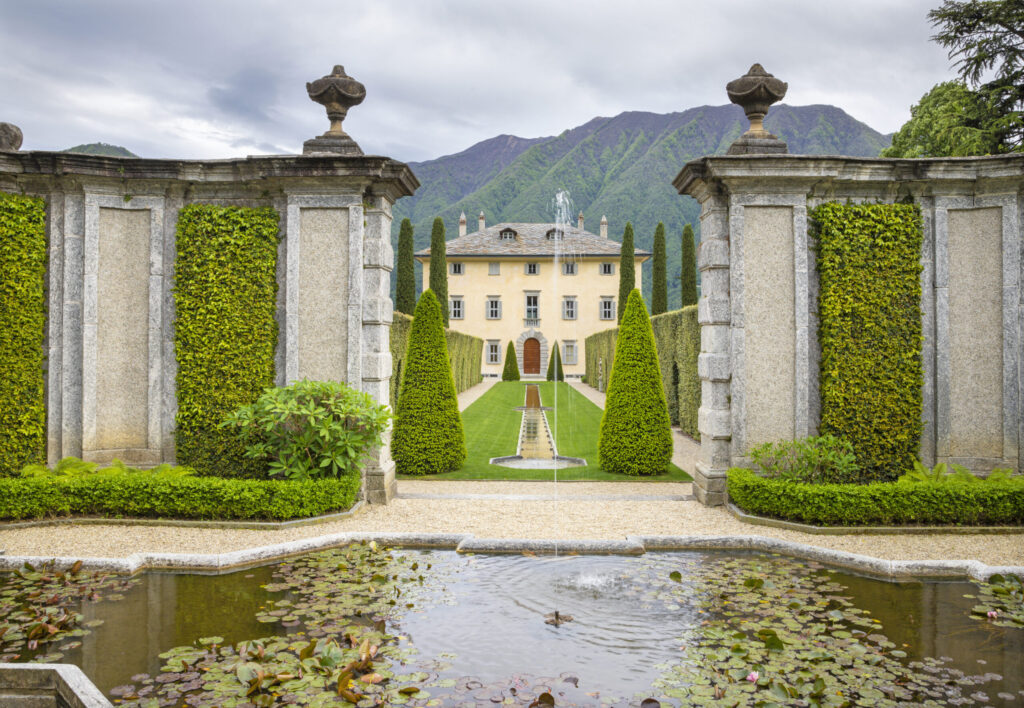
Lake Como is the most elegant and structured region for a wedding in Italy. The water, the mountains beyond, the historic villas right on the shore with their symmetrical gardens — Lake Como brings an iconic visual imagery, yet possesses a clarity and tranquility that other regions of Italy do not offer.
Getting married in Italy on Lake Como means: formal elegance, an almost timeless aesthetic, villas with gardens that lead directly to the water, and a light that is soft and clear, especially in early summer and autumn. The villas on Lake Como are often smaller than you might expect – this creates an intimacy that is exceptionally valuable for weddings.
Villa del Balbianello is the most famous wedding venue on Lake Como and indeed in all of Italy — and one of the few locations in the world that truly needs no decoration. The architecture, the terraces, the view of the lake — everything is already complete. Anyone wishing to marry here should be aware: demand is extremely high, availability is very limited, and the requirements of the FAI Foundation, which manages the villa, are clearly defined.
Lake Garda – Lightness, expanse, and a relaxed atmosphere
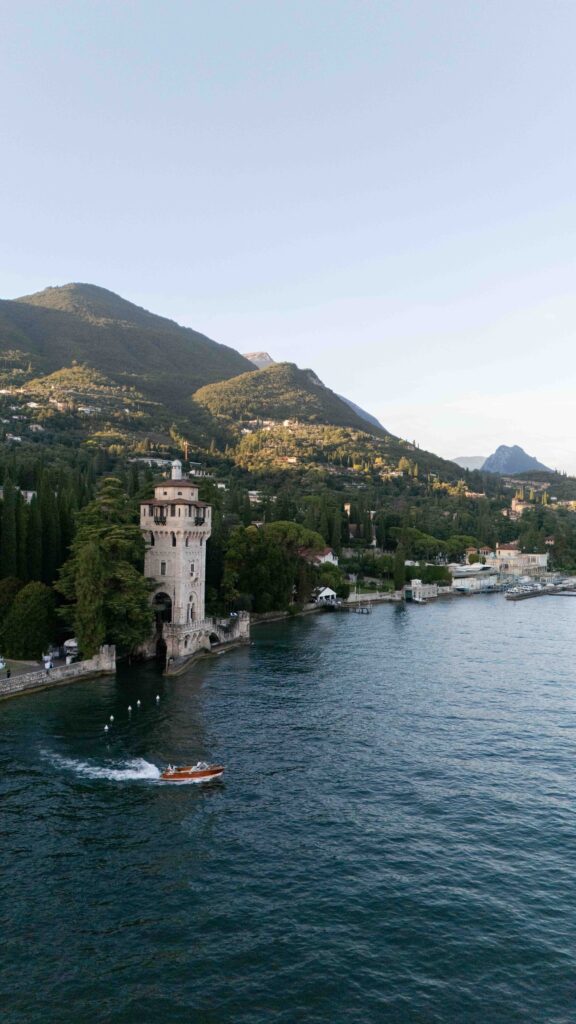
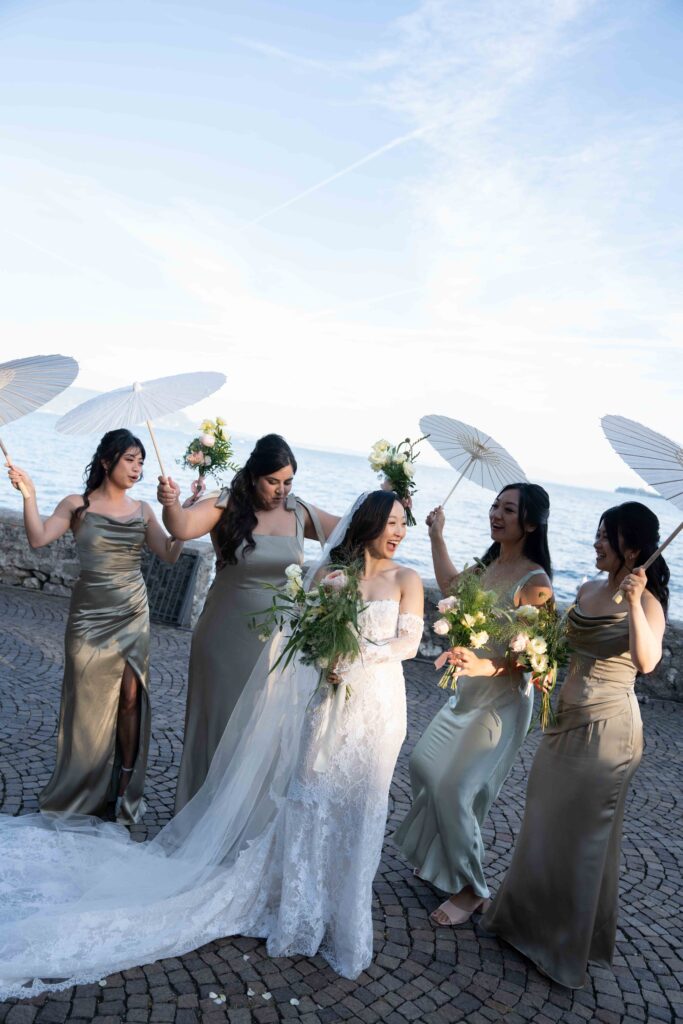
Lake Garda is the more open, accessible alternative to Lake Como for a wedding in Italy. The landscape is wider, the venues are less formal, and the overall mood is lighter and less staged than at Lake Como.
Getting married in Italy at Lake Garda means: an atmosphere that feels less like an event and more like an experience. The villas and venues at Lake Garda have a quality that is not defined by impressiveness, but by proportions and atmosphere. The light is brighter and more open than at Lake Como, the colours more vibrant, the overall energy more relaxed.
For couples planning a wedding in Italy and seeking a less formal, lighter atmosphere, Lake Garda is often the stronger choice over Lake Como. It allows for more creative freedom and is more forgiving of conceptual decisions that might quickly seem out of place in the more formal setting of Lake Como.
Amalfi Coast — Drama, Contrasts, and Cinematic Settings
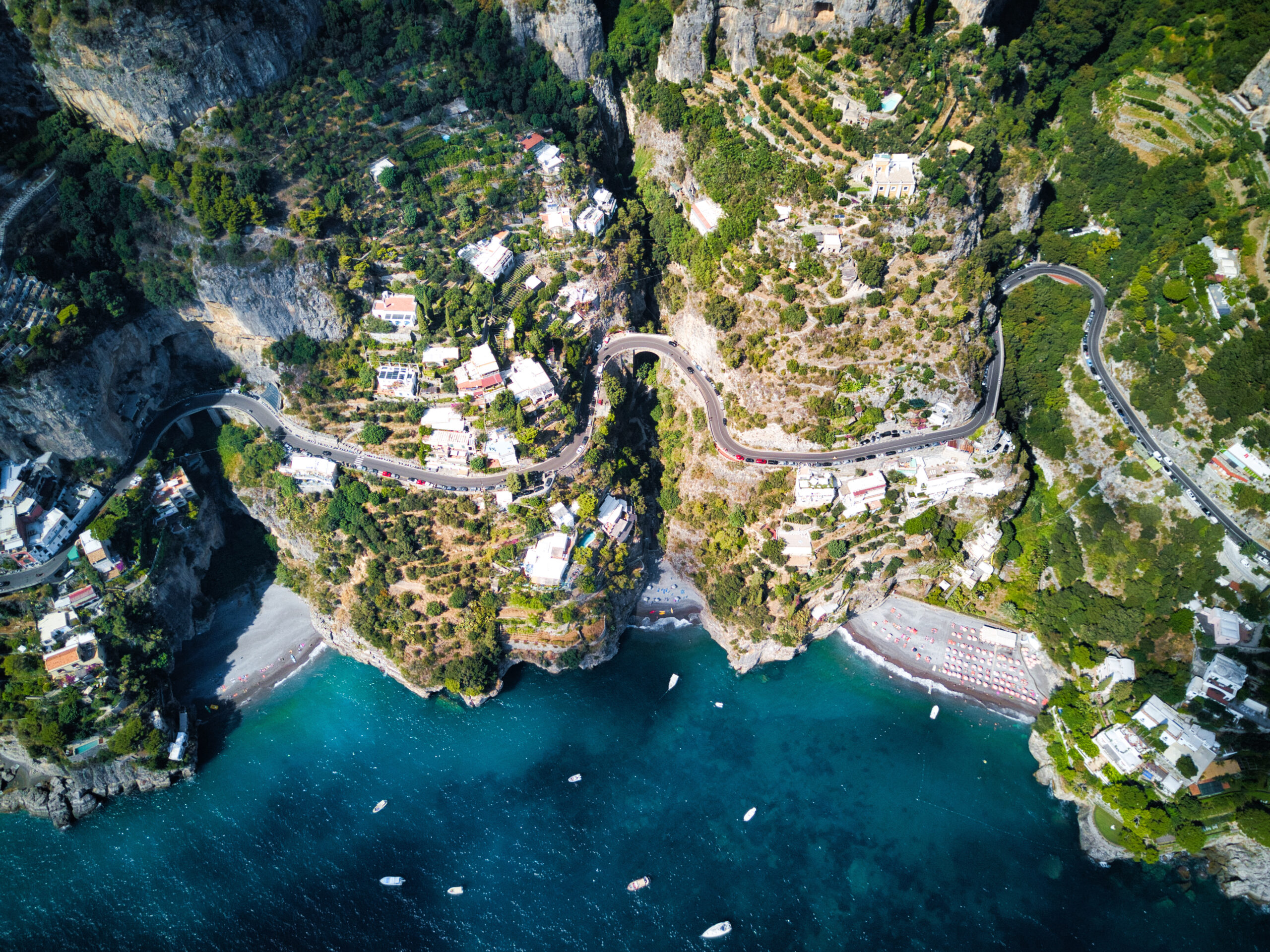
The Amalfi Coast is the most dramatic region in Italy for a wedding. Steep cliffs, turquoise waters, narrow streets, colourful houses piled on top of each other – the Amalfi Coast has a visual intensity that no other region in Italy can offer in this form.
Getting married in Italy on the Amalfi Coast means: strong contrasts, intense light, and imagery that feels vibrant and almost cinematic. What's often underestimated is the high logistical complexity. Narrow roads, difficult journeys for guests, limited parking – a wedding on the Amalfi Coast requires significantly more planning effort than a wedding in Tuscany or on Lake Garda.
For couples willing to accept these challenges in exchange for a globally recognised backdrop, the Amalfi Coast is an exceptional choice. For couples who prioritise seamless logistics, other regions are recommended.
Apulia — Reduction, peace and modern aesthetics
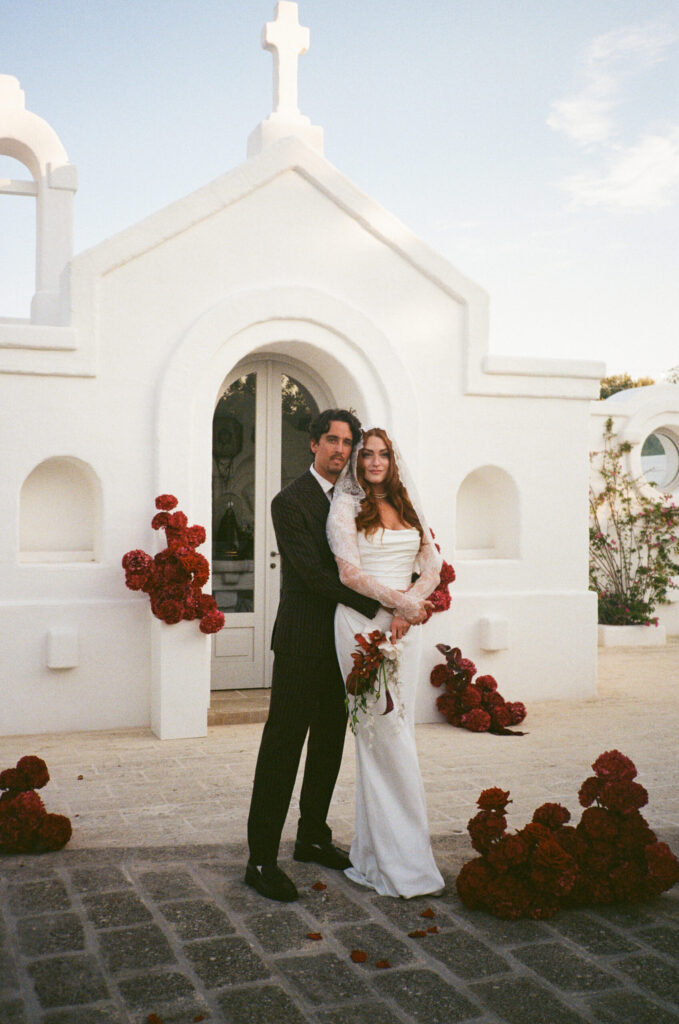
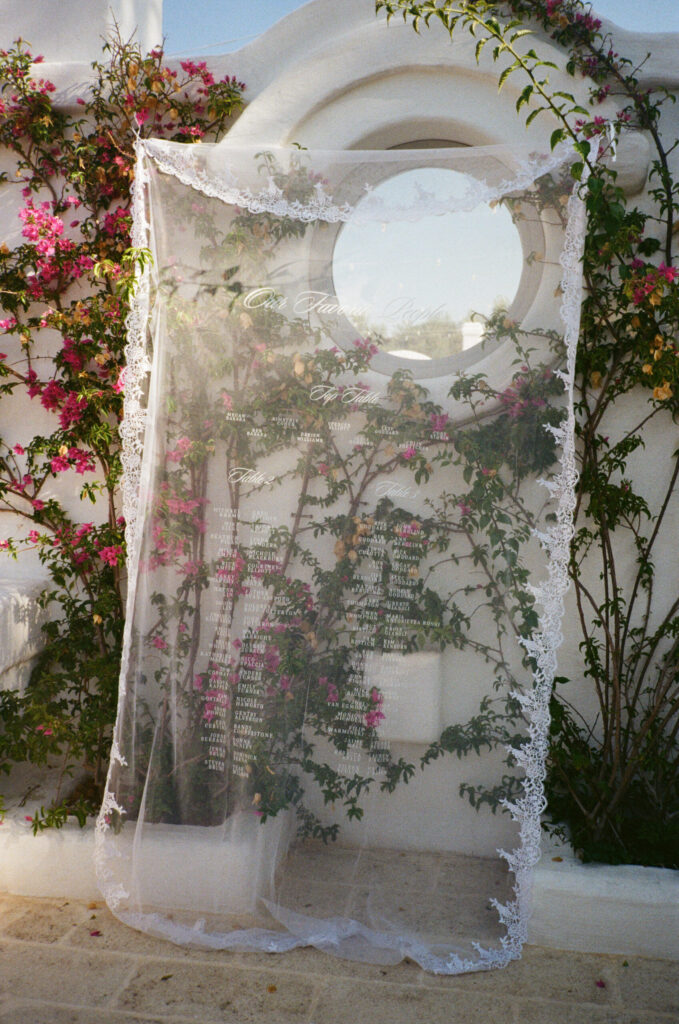
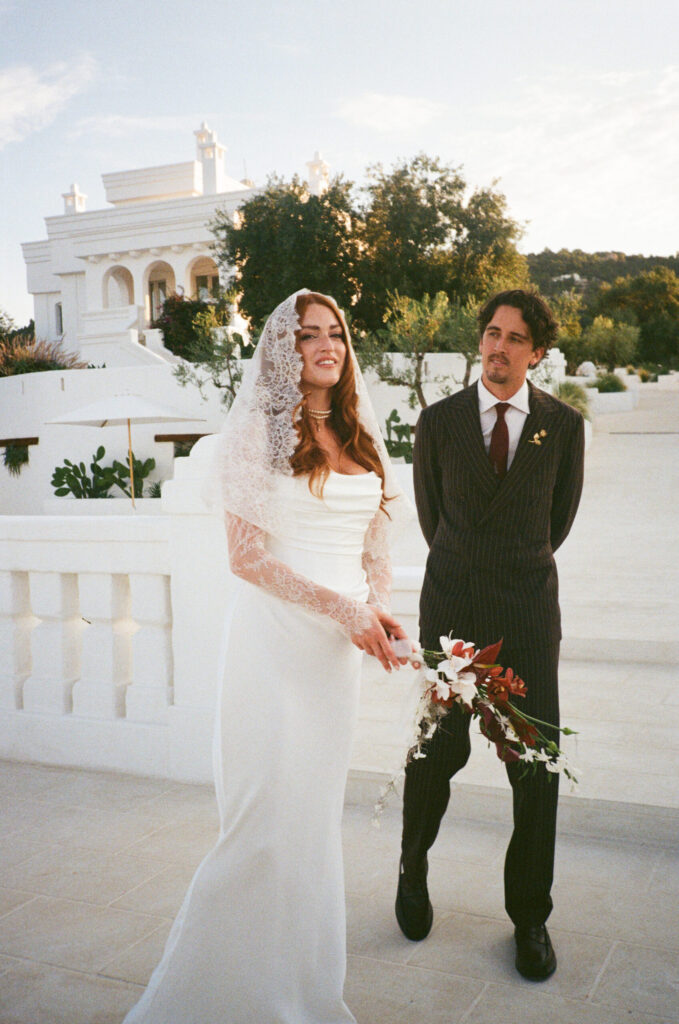
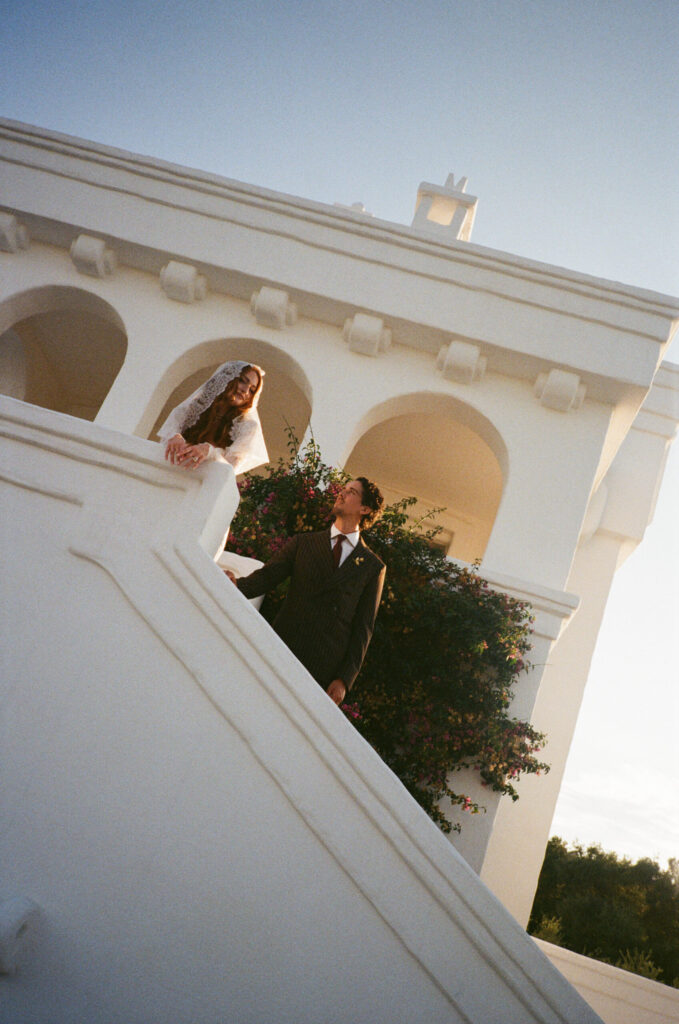
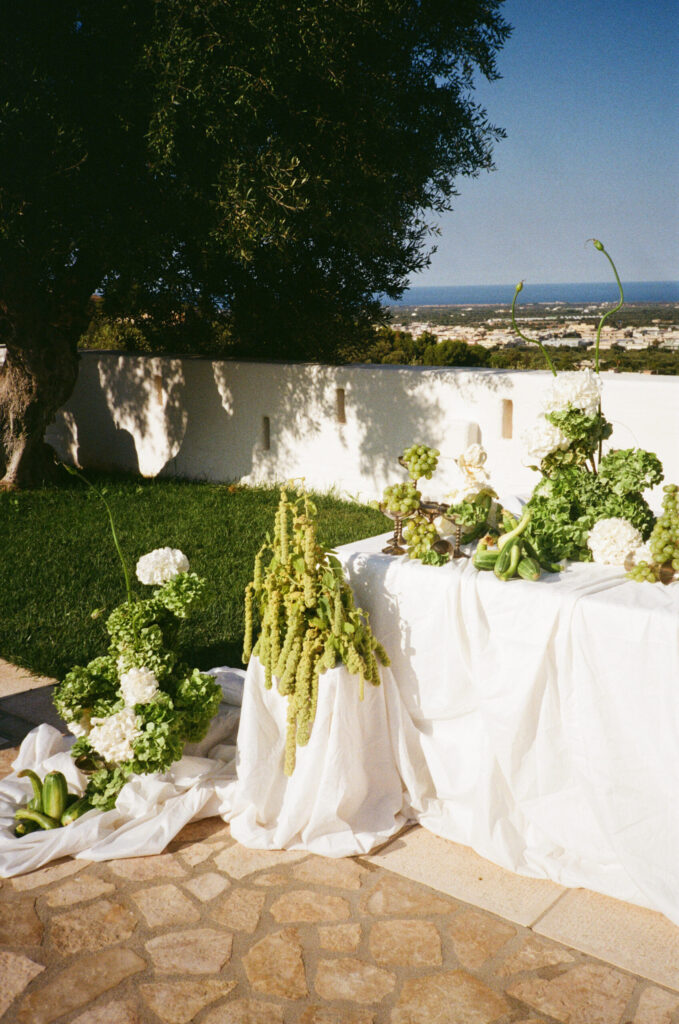
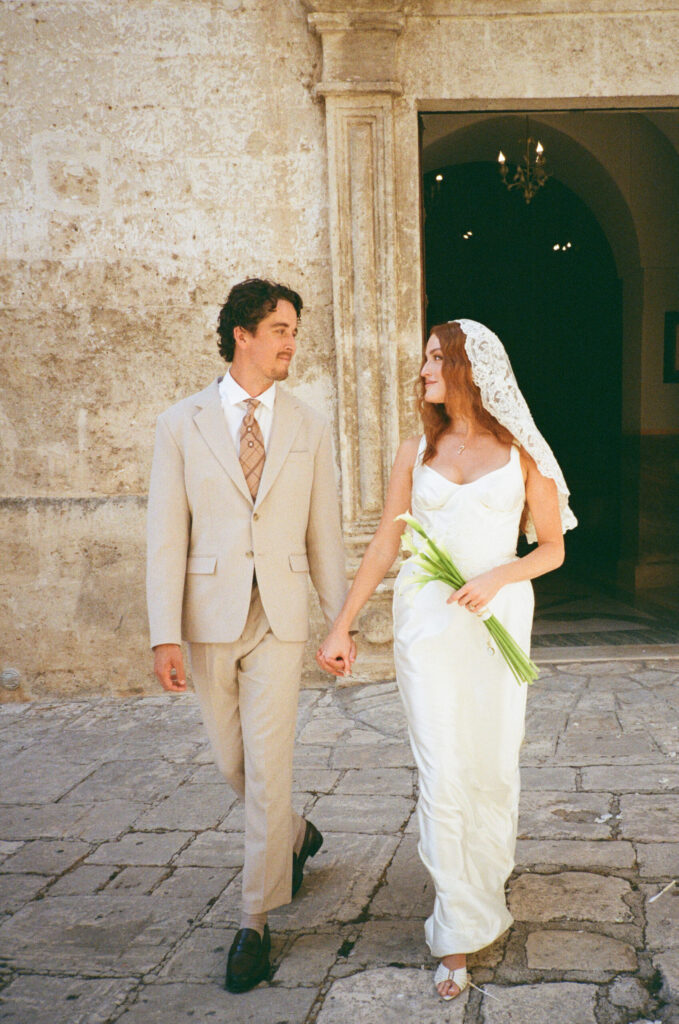

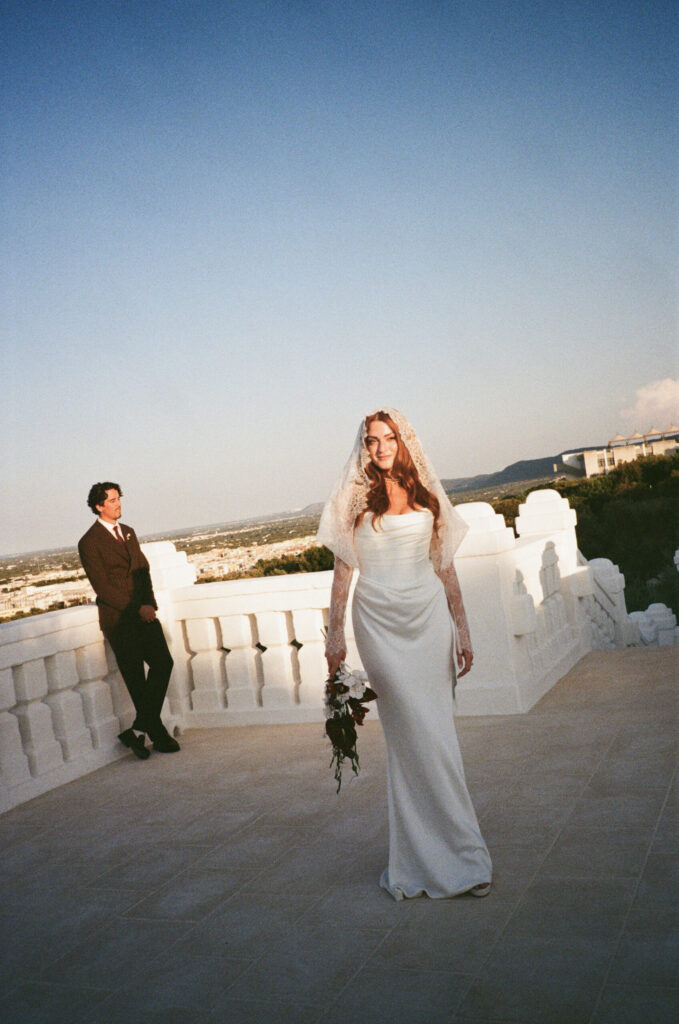
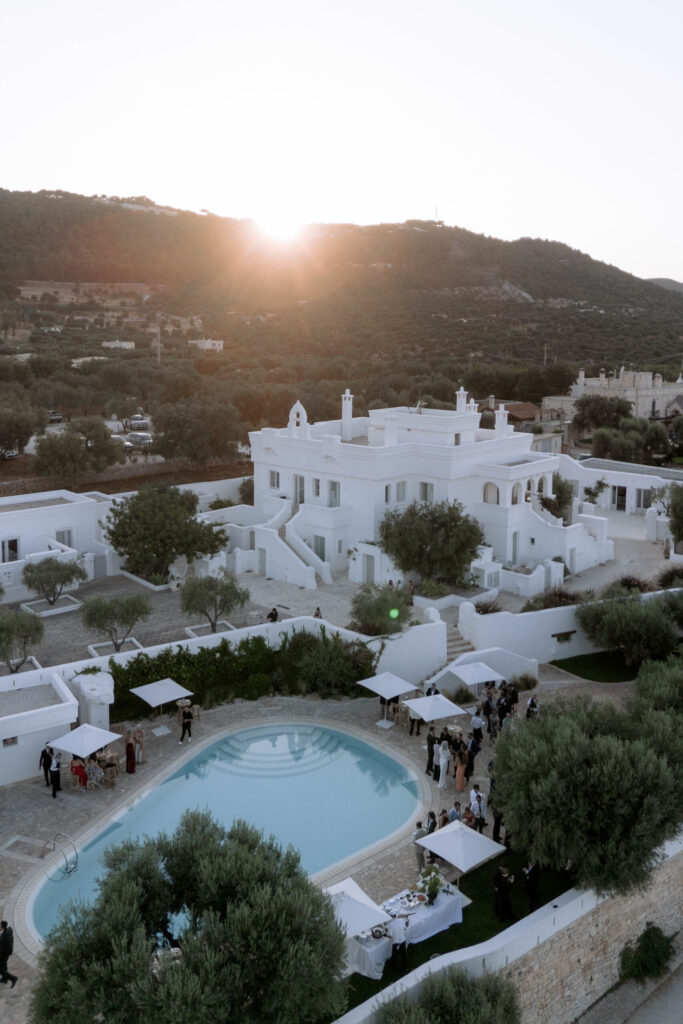
Puglia is the most modern and understated region in Italy for a wedding – and at the same time one of the most underestimated. While Tuscany and Lake Como have been considered classic wedding destinations for years, couples tend to choose Puglia very consciously. Not because it's the most obvious choice, but because it feels different.
Getting married in Italy in Puglia means: bright stone, wide landscapes, olive groves, masserias with clear forms and a reduced colour palette, which is photographically exceptionally strong. The light in Apulia is warm, soft, and even — especially in the late afternoon, a mood is created that is almost cinematic.
For couples with a distinct aesthetic and a desire for a wedding that feels modern, serene, and uncluttered, Puglia is the strongest choice in all of Italy.
Sicily — History, Contrasts, and an Almost Theatrical Atmosphere
Sicily is the most characterful and original region in Italy for a wedding. Baroque cities, volcanic landscapes, a sea that on some days is so blue it appears unreal – Sicily brings an energy that no other region in Italy possesses in this form.
Getting married in Italy, in Sicily, means a wedding with character. Not the polished elegance of Tuscany, nor the formal precision of Lake Como, but something deeper, rougher, more honest. Sicily is for couples who want a wedding that stands out from the rest – not through spectacle, but through an originality that comes from the place itself.
What makes Sicily particularly special is the combination: Baroque palaces in Noto or Ragusa as ceremony locations, a dinner with views of Mount Etna, imagery that is completely different from all other weddings.
Rome — History, Monumentality and Urban Elegance
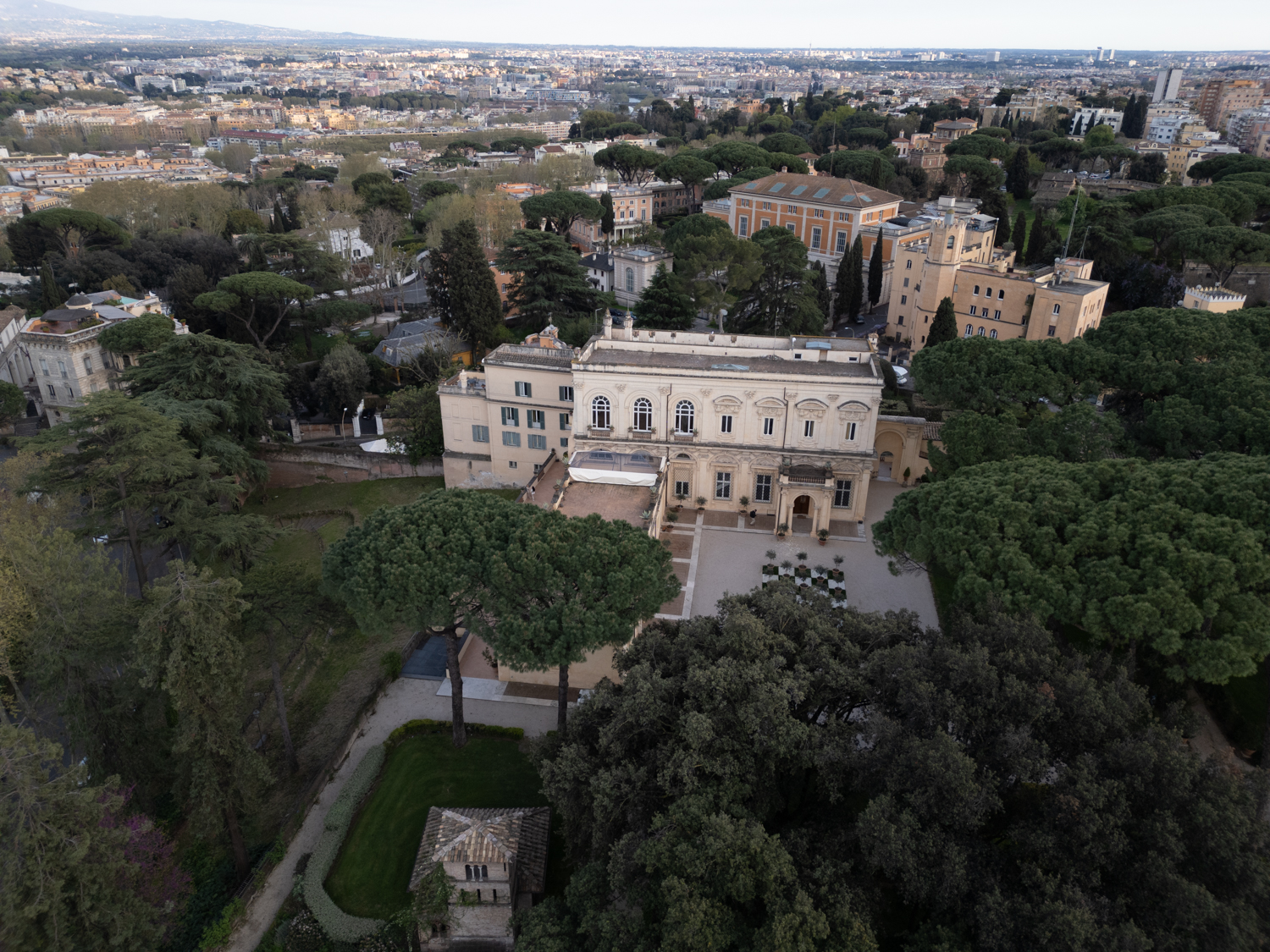
Rome is the most urban and historically dense option for a wedding in Italy. Historic villas on the seven hills, narrow streets, Baroque piazzas, architecture that is both monumental and vibrant – Rome offers imagery that feels editorial and almost cinematic.
Marrying in Italy in Rome means: a wedding that doesn't feel like a destination wedding, but like an urban experience. For couples planning an urban wedding and wanting to use the historical depth of one of the oldest cities in the world as a setting, Rome is the strongest option in all of Italy.
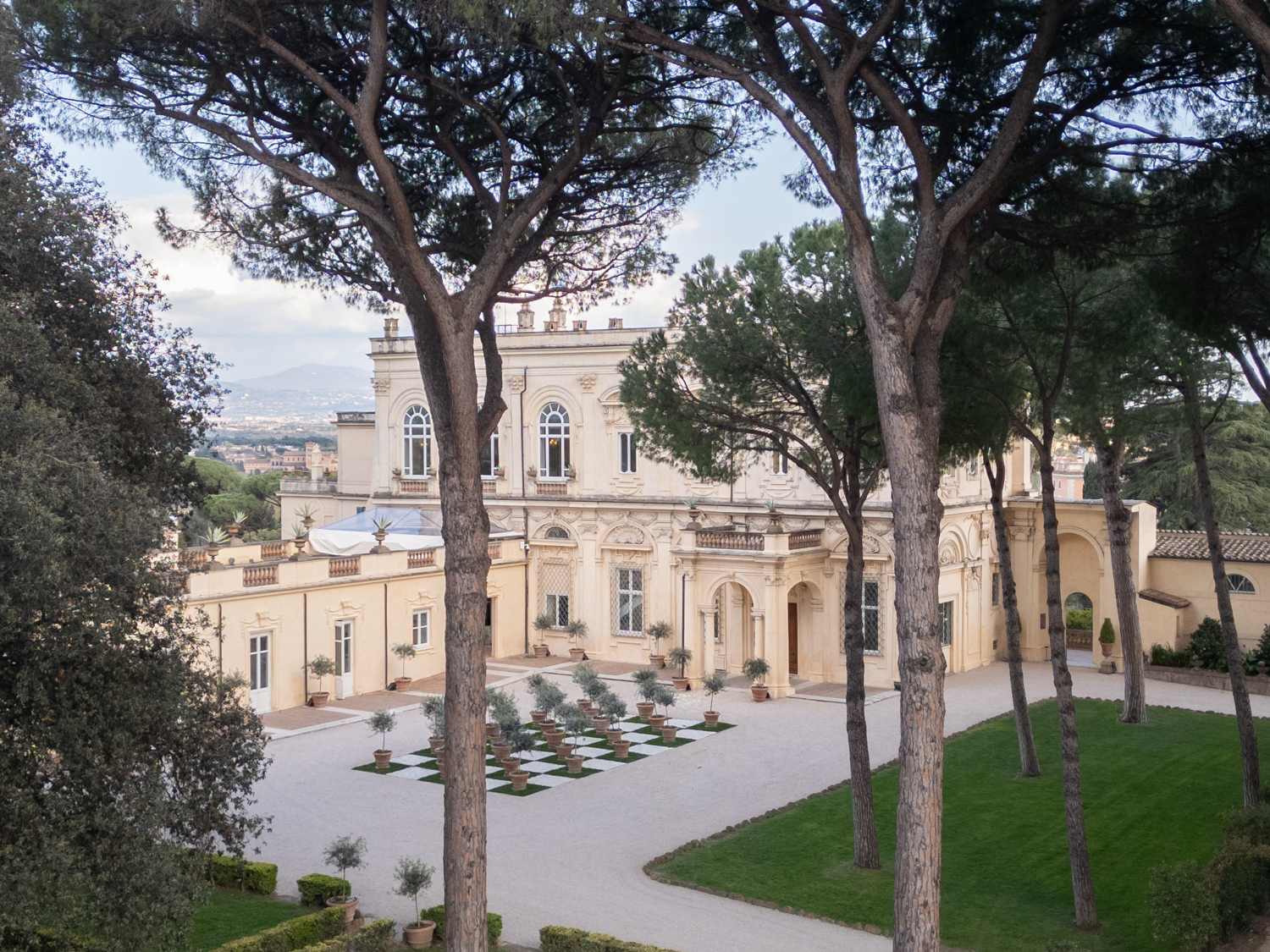
Villa Aurelia on the Janiculum Hill is Rome's premier wedding venue: a historic estate with panoramic views over the city, a garden seemingly made for weddings, and an atmosphere that perfectly balances history and the present day.

Venice — Atmosphere, Water, and a Surreal Uniqueness
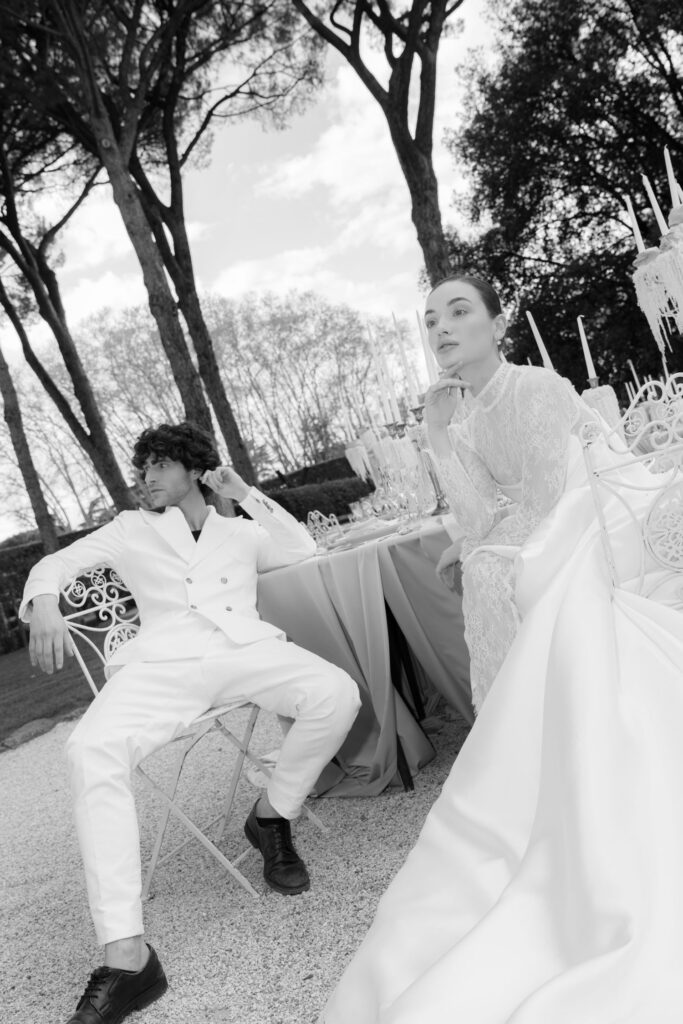
Venice is Italy's most extraordinary and unique wedding destination. Water, narrow alleyways, historic buildings, gondolas, light that reflects and constantly changes on the water's surface – Venice is a place that is photographically and emotionally completely distinct from all other wedding destinations.
Getting married in Italy, in Venice, is for couples who prioritise atmosphere over perfection. Venice cannot be entirely controlled – it is alive, changeable, sometimes loud, sometimes unrealistically quiet. Those who love and accept this will receive unique pictures and moments. Those seeking perfection and full control would be better suited to other regions.
Sardinia — Sea, Silence, and Mediterranean Authenticity
Sardinia is the most private and unspoilt coastal destination for a wedding in Italy. Crystal-clear water, pristine beaches, a natural environment that is less developed and less staged than most other regions of Italy — Sardinia brings a stillness and seclusion that is hard to find on the Italian mainland.
Getting married in Sardinia, Italy, is for couples who want to combine a sea view with seclusion. For weddings that are meant to feel private – far from the tourism, far from the noise. The locations in Sardinia are less well-known than those on Lake Como or in Tuscany, but are exceptionally striking for the right couples.
Capri – iconic, minimalist, and utterly exclusive
Capri is the smallest and most exclusive option for a wedding in Italy. The island in the Bay of Naples is world-renowned for its white architecture, deep blue waters, and an aesthetic that is both pared-back and unmistakable.
Marrying in Italy on Capri means: complete exclusivity, an imagery that is immediately recognisable, and logistics that must be carefully planned. Capri is small – this limits guest numbers and requires precise planning for travel and accommodation. At the same time, this very smallness is an advantage: a wedding on Capri feels private, even if the location is internationally renowned.
Wedding Venues Italy — An Overview of the Most Exclusive Locations
Getting married in Italy means choosing from an extraordinary selection of locations. This overview is not a comprehensive list, but rather a curated selection of the strongest venues for a luxury wedding in Italy — with an honest assessment of which location is truly suitable for whom.
Villa del Balbianello — the most iconic location on Lake Como
Villa del Balbianello is Italy's most famous wedding venue — and probably one of the most famous in the world. The estate on the western shore of Comer Sees, managed by the FAI Foundation, boasts a unique combination of architecture and location. Terraces that hang directly over the lake, ancient trees providing shade, and views that are exceptional in every direction.
What makes Villa del Balbianello so special for a wedding in Italy is its complete harmony. The place needs no decoration. It is already complete. Those who marry here don't need to design – they just need to immerse themselves. And this is precisely what makes this location so powerful and simultaneously so demanding: it does not tolerate arbitrariness. It demands respect for what is already there.
Demand for weddings at Villa del Balbianello is extremely high. Bookings often need to be made two years in advance. The FAI has clear regulations for weddings: guest numbers are limited, certain areas are not accessible, and the timeframe is strictly defined. An experienced Italian wedding planner with experience at this venue is essential here.
Isola del Garda – An island as an exclusive wedding venue
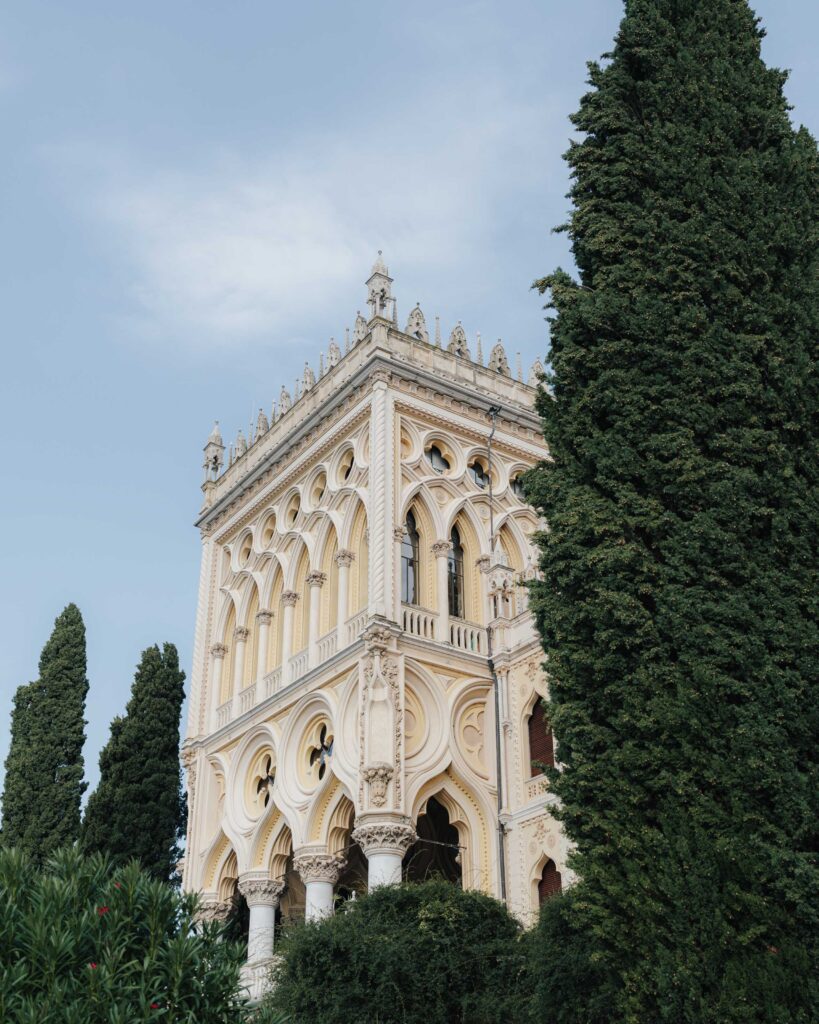
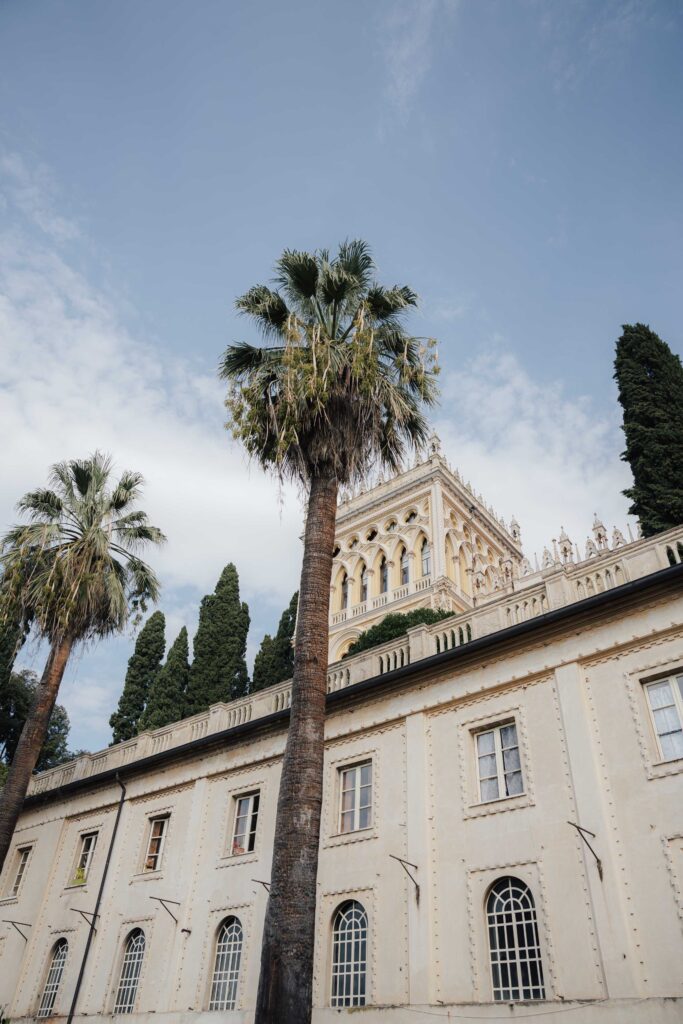
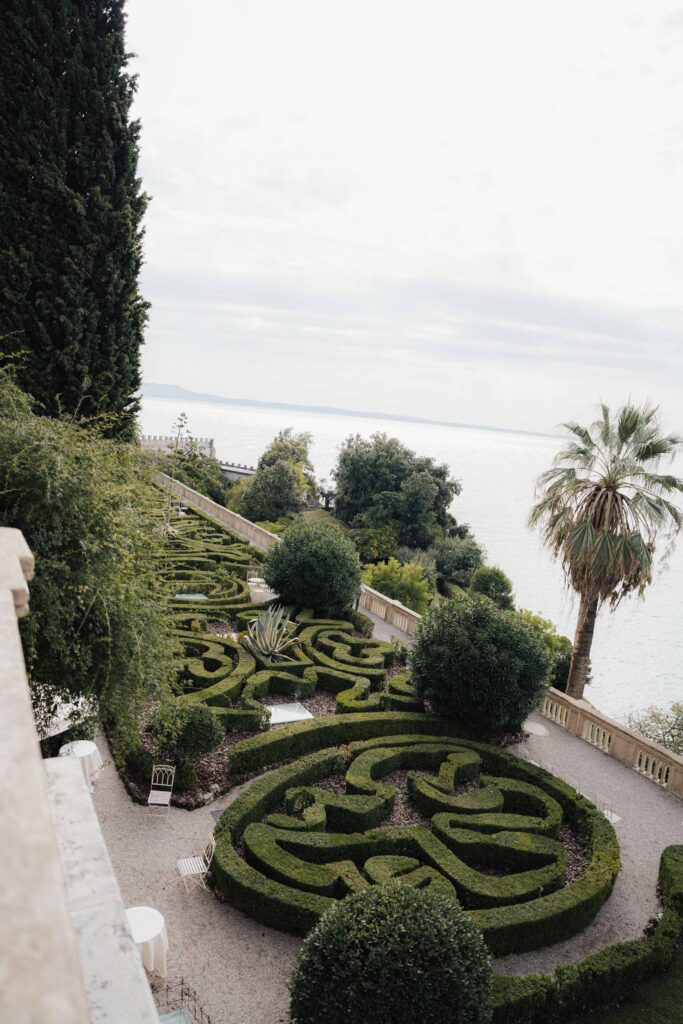
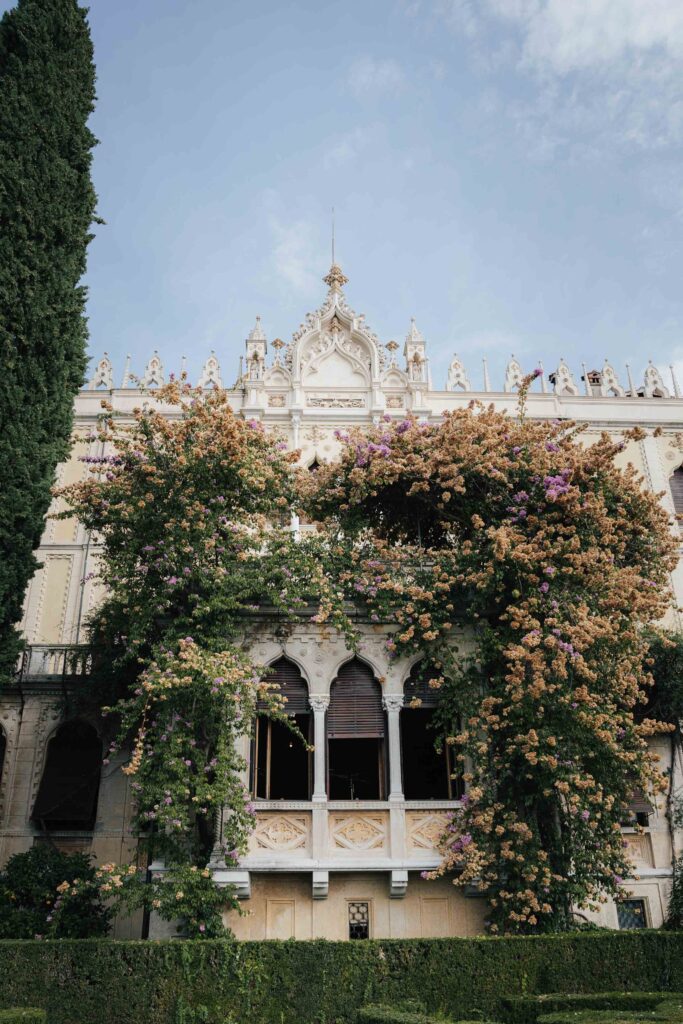
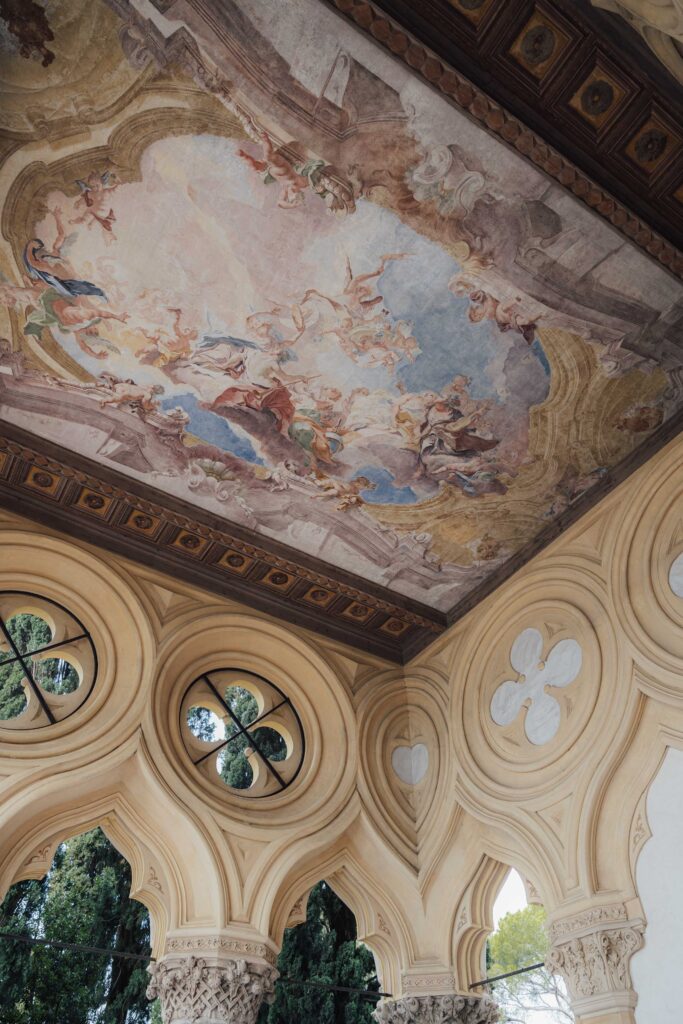
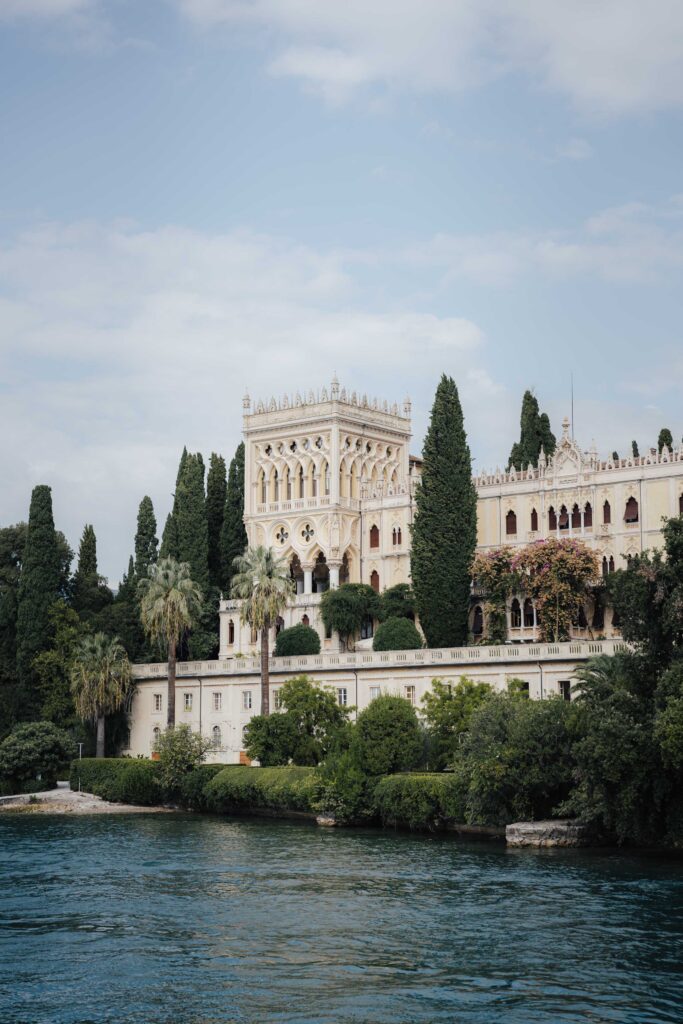
The Lake Garda Islandthe most exclusive Wedding venue Lake Garda — and one of the most extraordinary for a wedding Italy has to offer. The private island in the northern part of Lake Garda is owned by a noble family and is opened for select weddings. Venetian Gothic architecture, lush gardens, panoramic views of the lake and mountains — Isola del Garda has a quality that cannot be compared to any other location on Lake Garda.
What makes a wedding on Isola del Garda so special is the complete seclusion. You are on an island – literally surrounded by water. No noise from the street, no other guests, no interruptions. Just the wedding, the island and the lake. For couples planning to get married in Italy and seeking complete exclusivity, Isola del Garda is one of the strongest options available.
Conti di San Bonifacio — Winery and Elegance in Tuscany
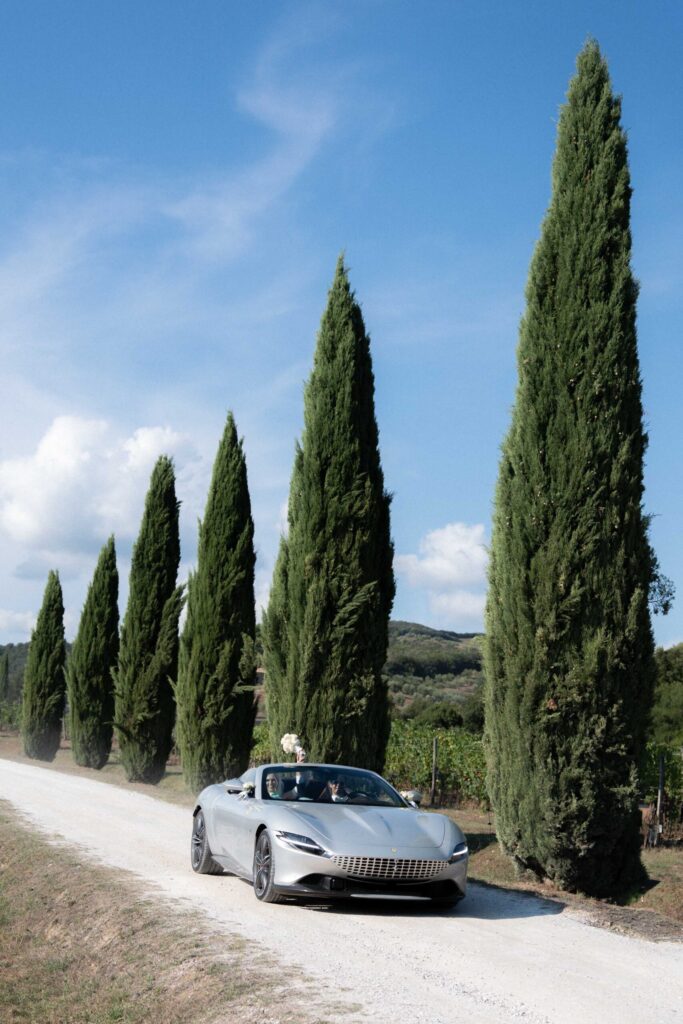
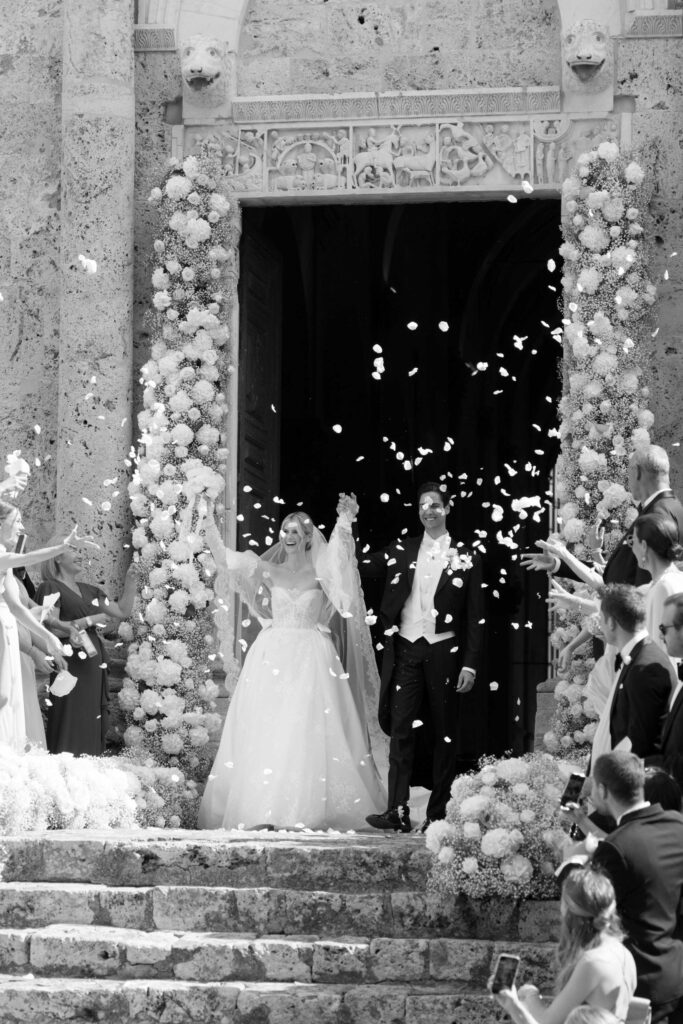
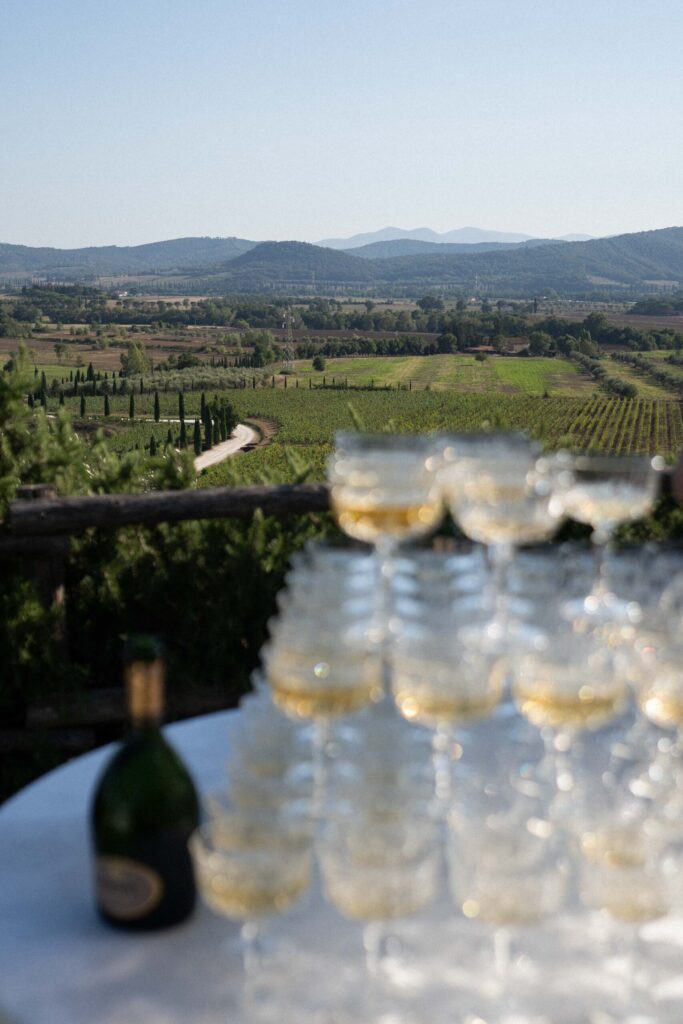

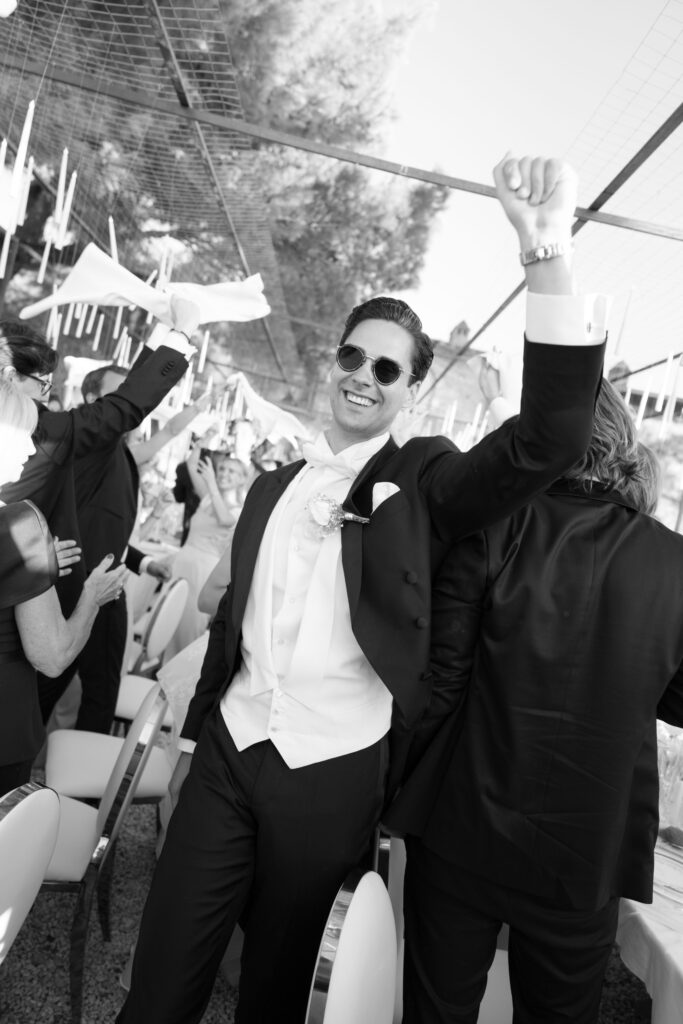
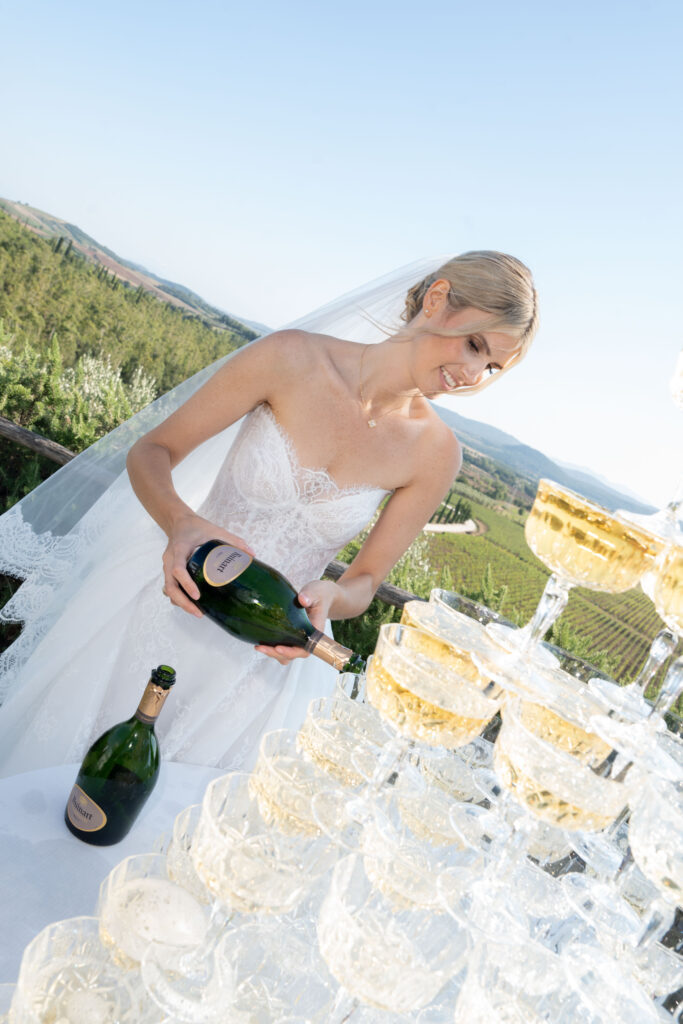
The Counts of San Bonifacio The reference location for a luxury wedding is Tuscany. The winery in Maremma combines wine production, historical architecture, and five-star hospitality to create a setting that works exceptionally well for multi-day destination weddings.
What that Conti di San Bonifacio for a wedding in Italy What makes it so special is the completeness. Location, accommodation for guests, catering from our own production – all in one place. The wedding doesn't have to be coordinated between different venues. It unfolds organically on an estate that is made for it.
Villa Aurelia Rome – History and Panorama over the Eternal City
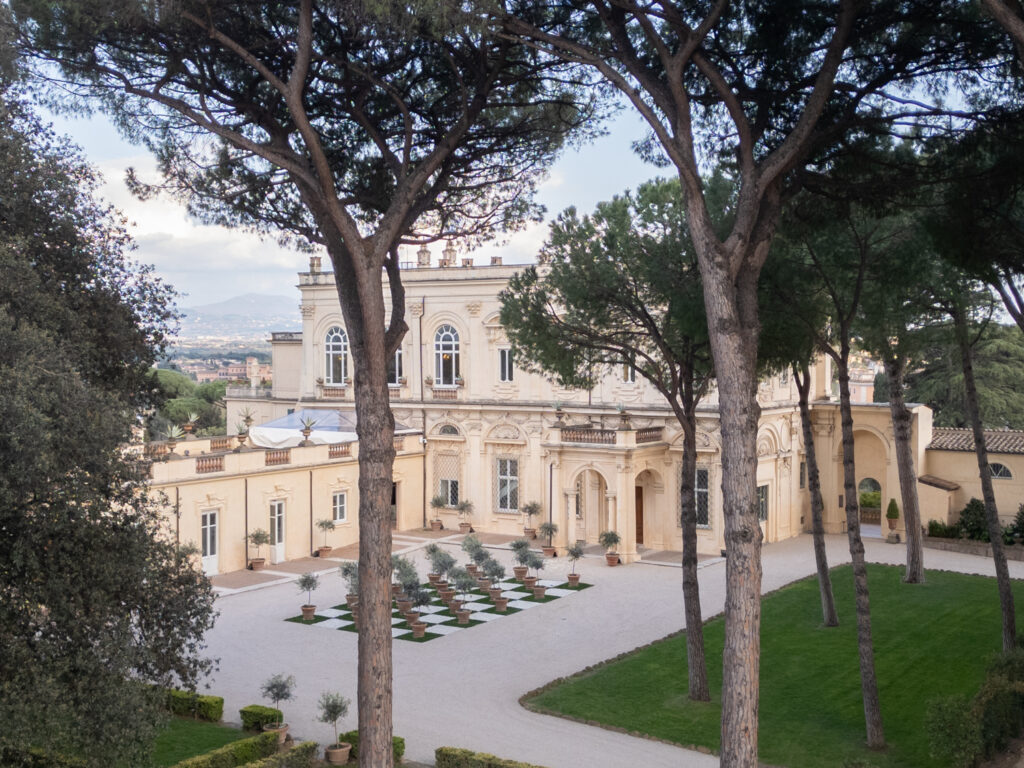

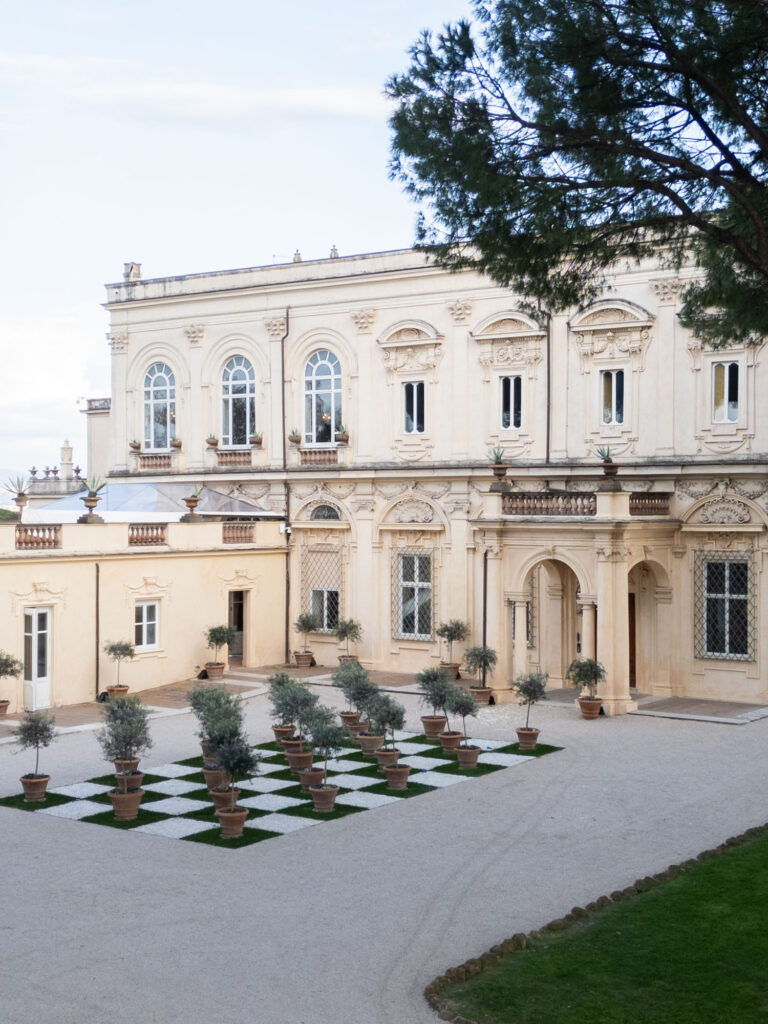

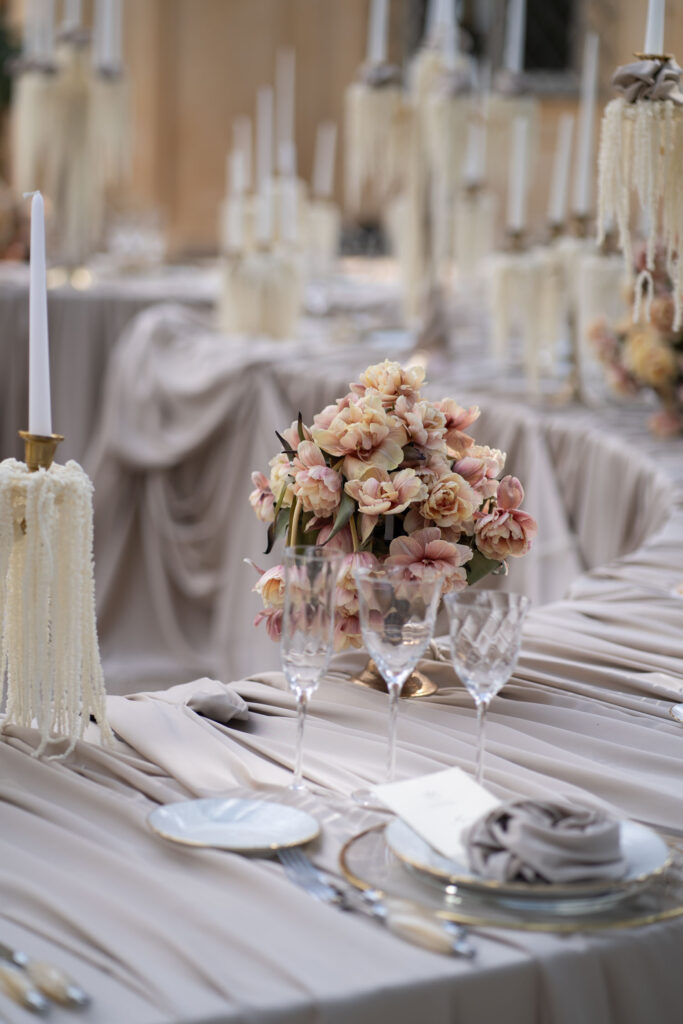
The Villa Aurelia On the Gianicolo is one of the strongest urban wedding venues for a wedding in Italy. The historic estate is located on one of Rome's hills, with a panoramic view over the entire city, an expansive garden, and architecture that combines historical grandeur with a certain tranquility rarely found in Rome.
What makes Villa Aurelia so special for a wedding in Rome is the combination of city backdrop and seclusion. You're right in the heart of Rome – and at the same time, completely removed from the city's noise. The garden, the terraces, the view of the city's domes and towers – all of this creates an atmosphere that is both editorial and emotional.
Masseria Borgo Ritella — Puglia at its finest
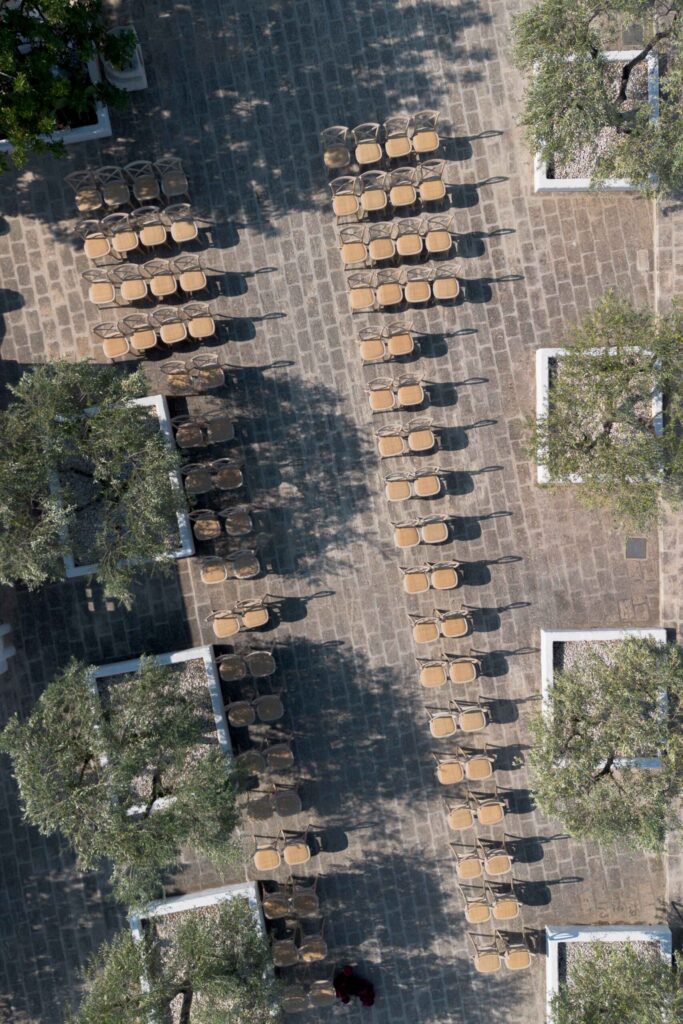
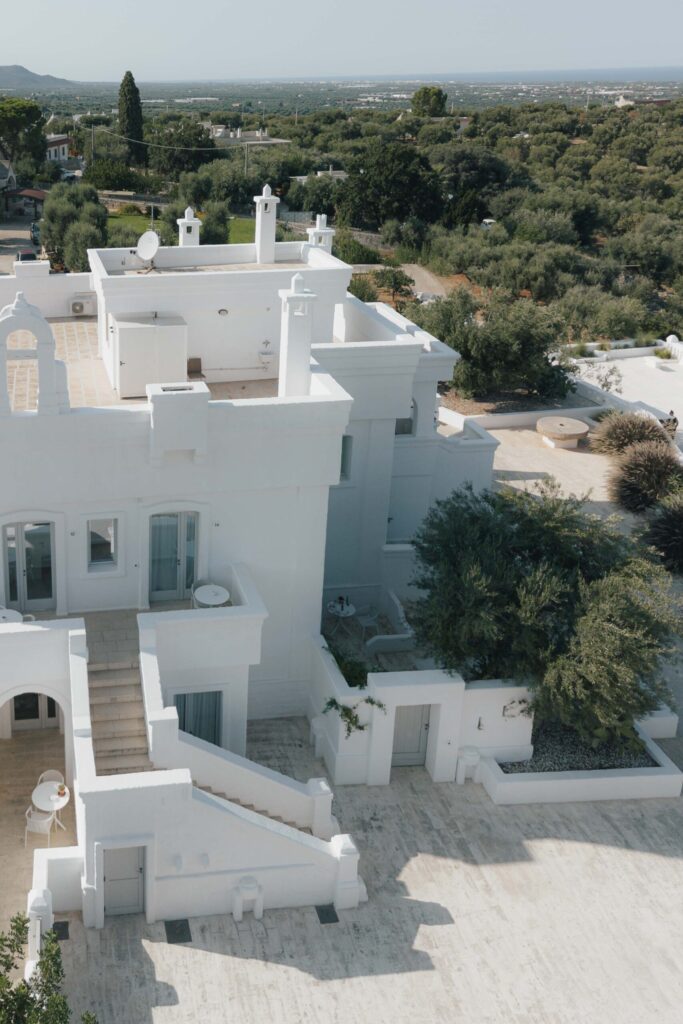
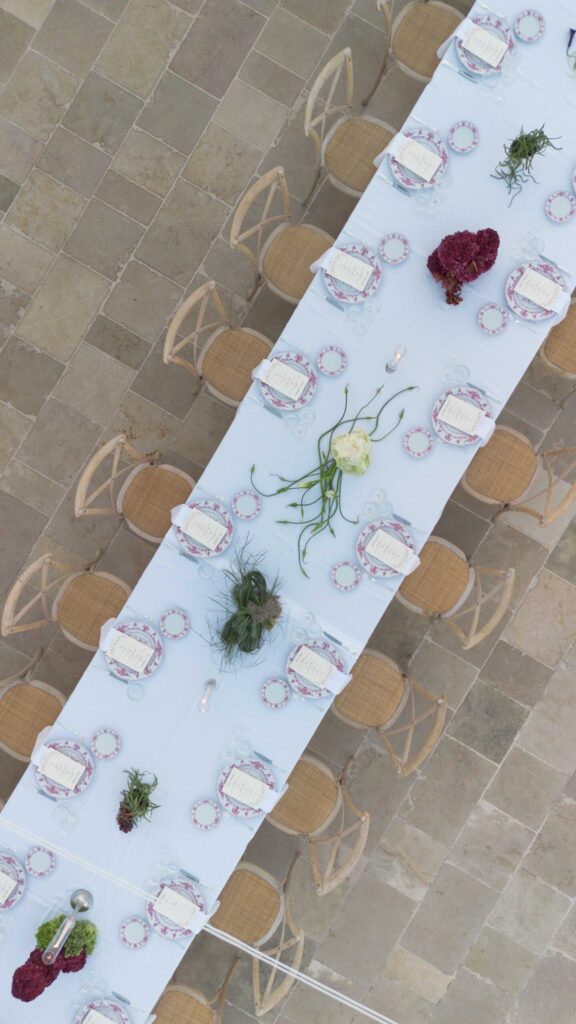
The Masseria Borgo Ritella Puglia is one of the strongest locations for a wedding. The Masseria combines typical Apulian architecture – bright stone, clean lines, natural materials – with service and infrastructure that meets international luxury standards.
What makes Masseria Borgo Ritella so special for a wedding in Italy is its authenticity. It doesn't feel like a location optimised for weddings, but like a place with real history and real character. This is exactly what makes Puglia weddings so powerful – and what is often lost in over-decorated locations.
Villa Bettoni — Grandeur on the shores of Lake Garda

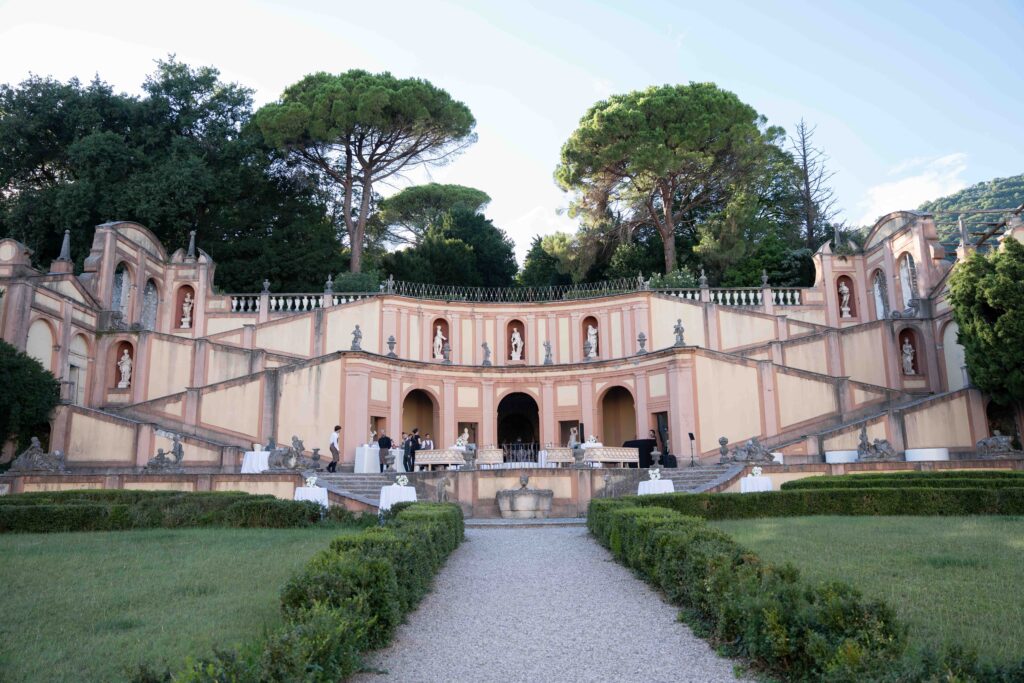

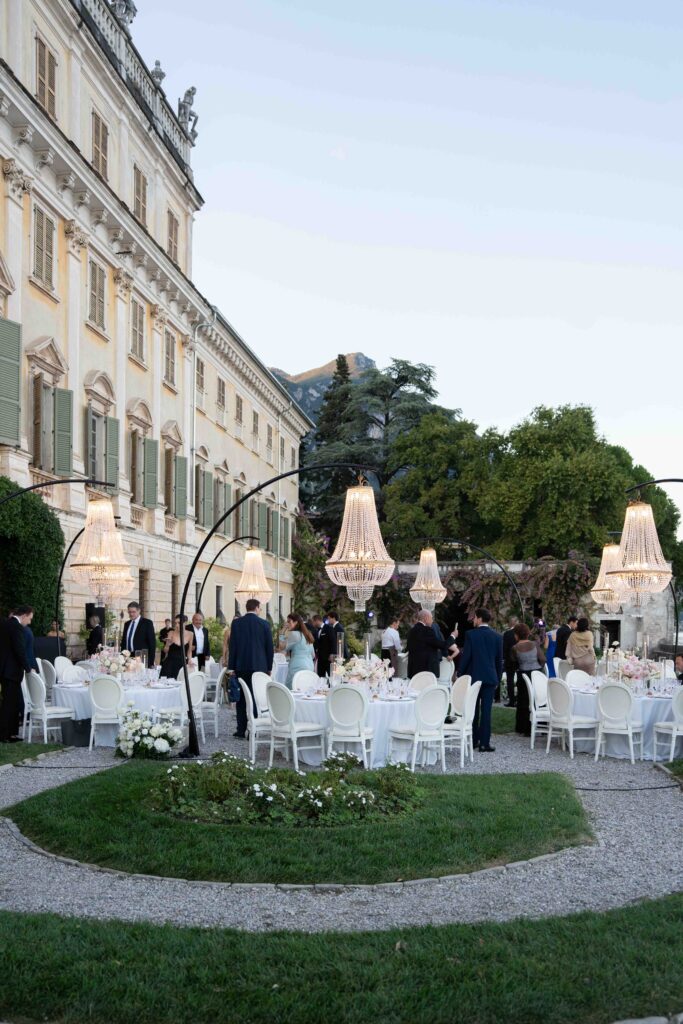
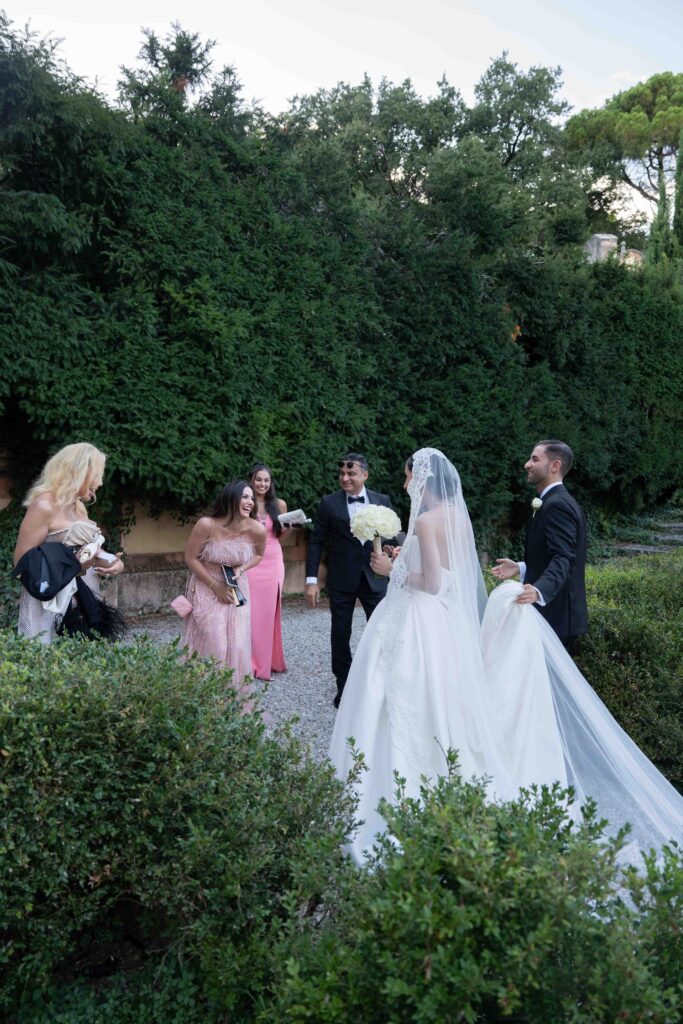
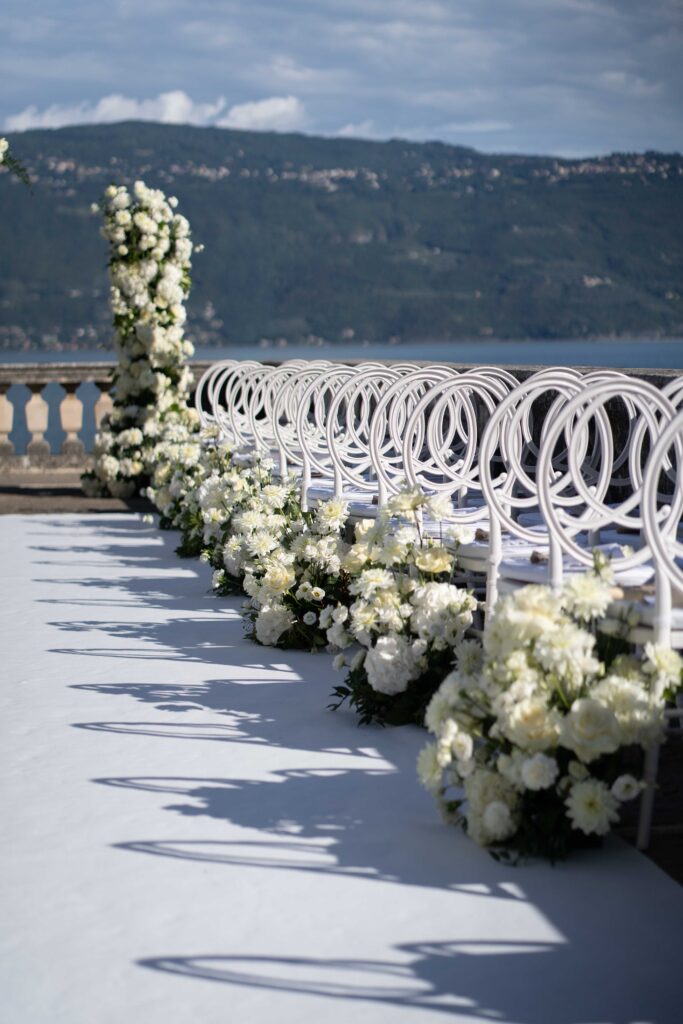
The Villa Bettoni, Bogliaco is one of the most impressive villas on Lake Garda and one of the most powerful locations for a wedding in Italy in this region. The monumental baroque architecture, the staircases, the terraces with a direct view of the lake — Villa Bettoni has a visual presence that stands out even among the historic villas of Lake Garda.
For a wedding on Lake Garda with a larger party and a classic-elegant concept, Villa Bettoni is one of the strongest options. It accommodates large parties without seeming impersonal, and it offers a visual identity that balances historical grandeur with Mediterranean lightness.
Torre San Marco — Modern exclusivity on Lake Garda

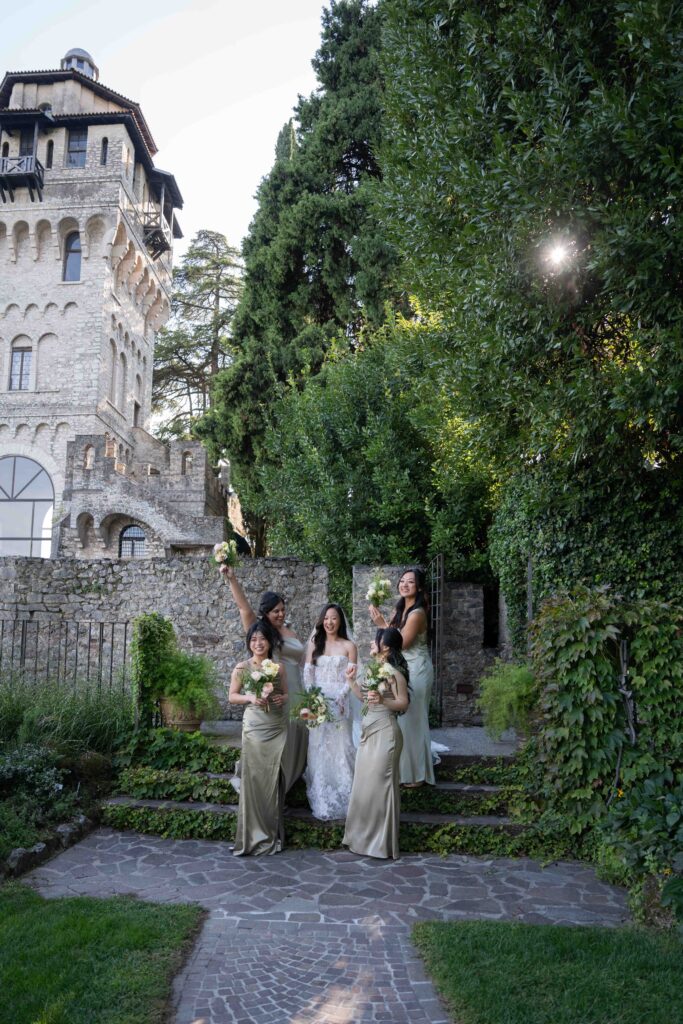
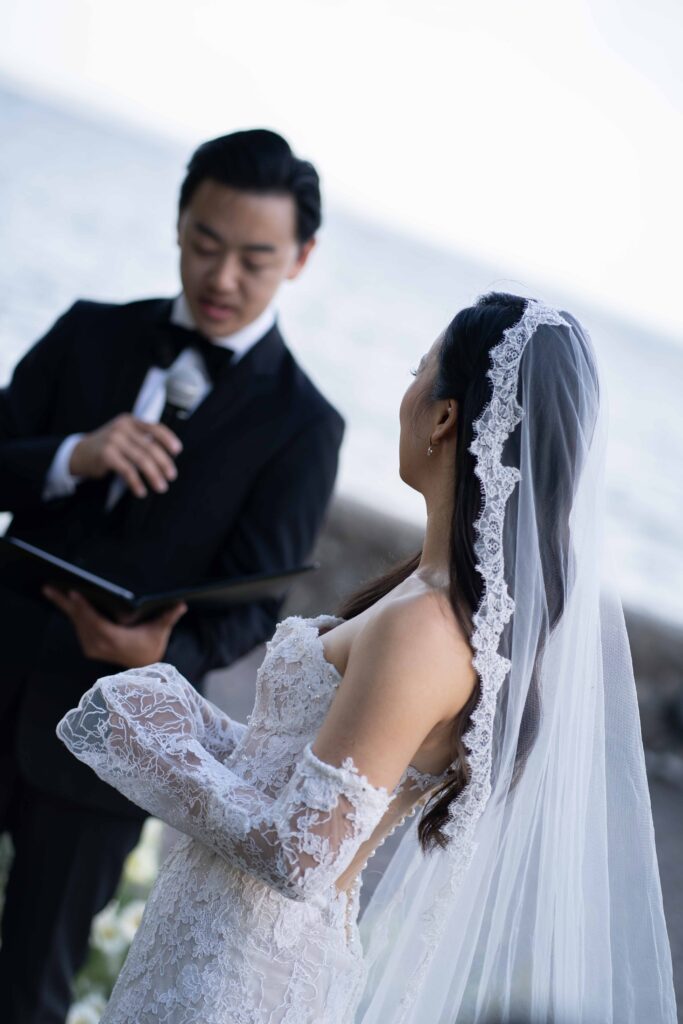
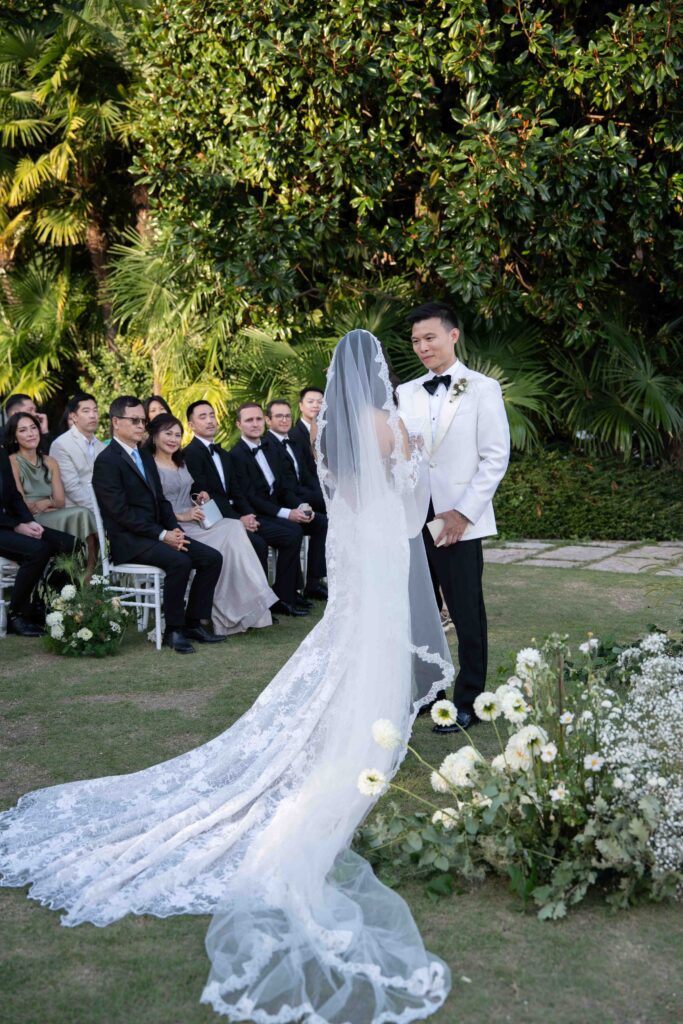
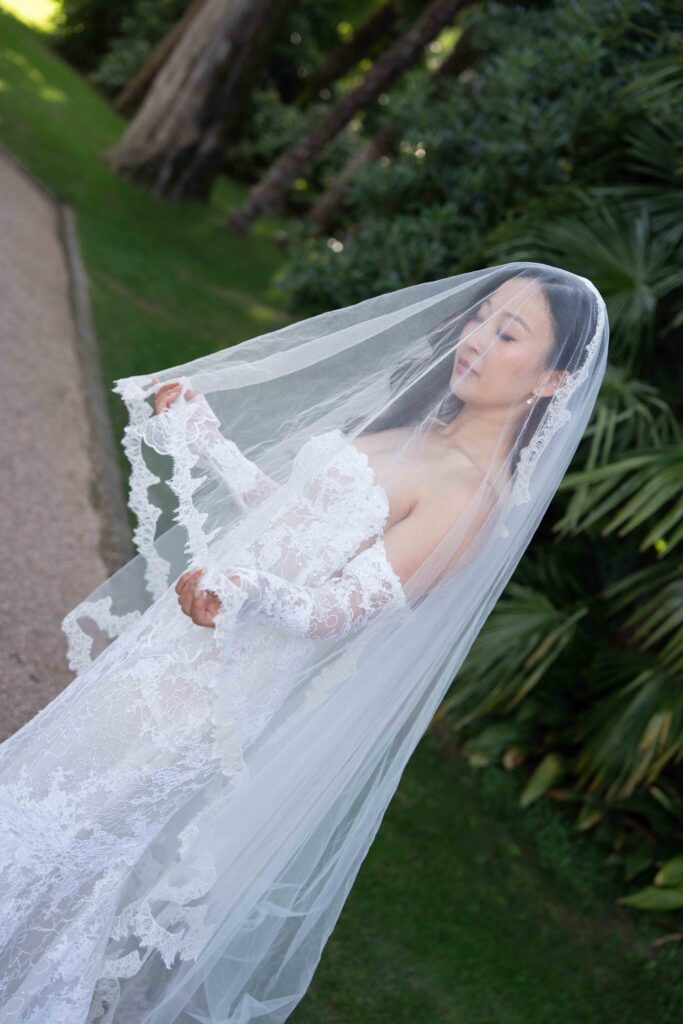
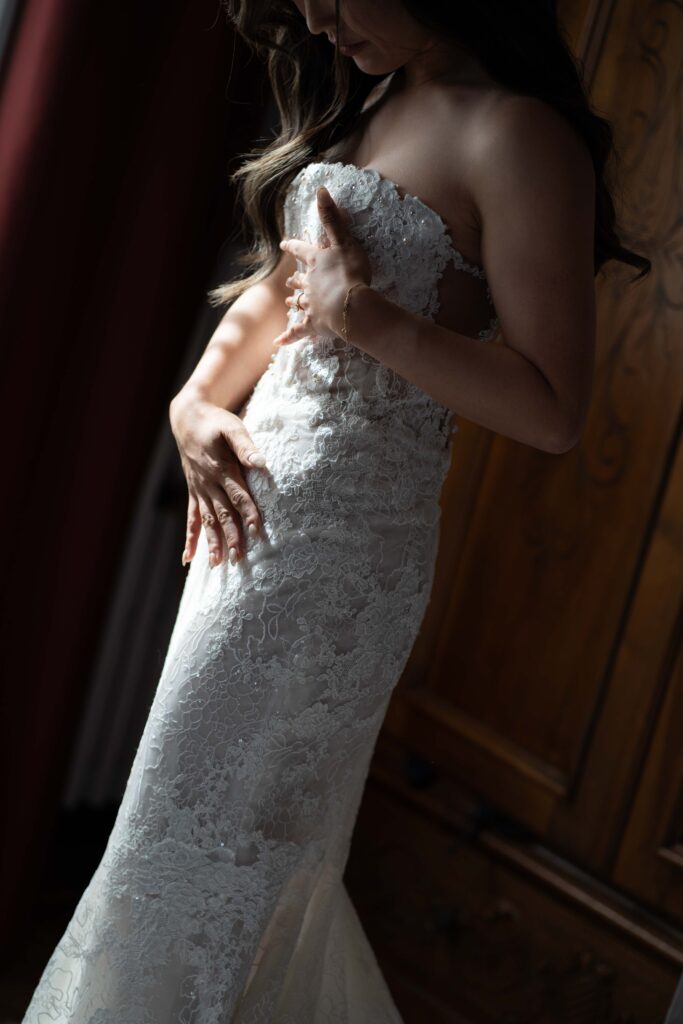
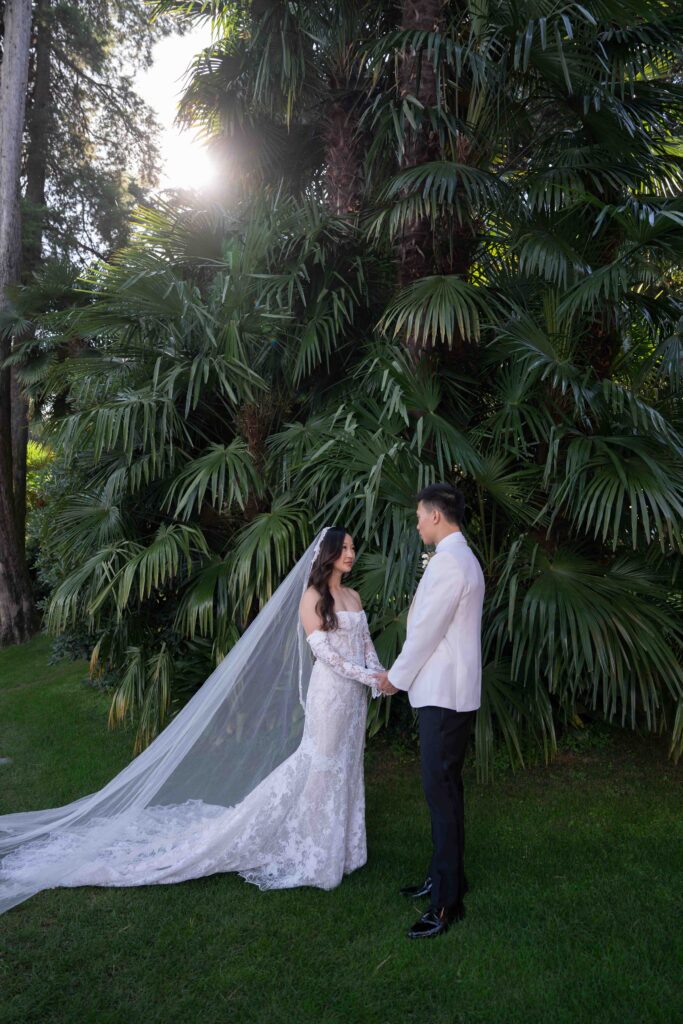
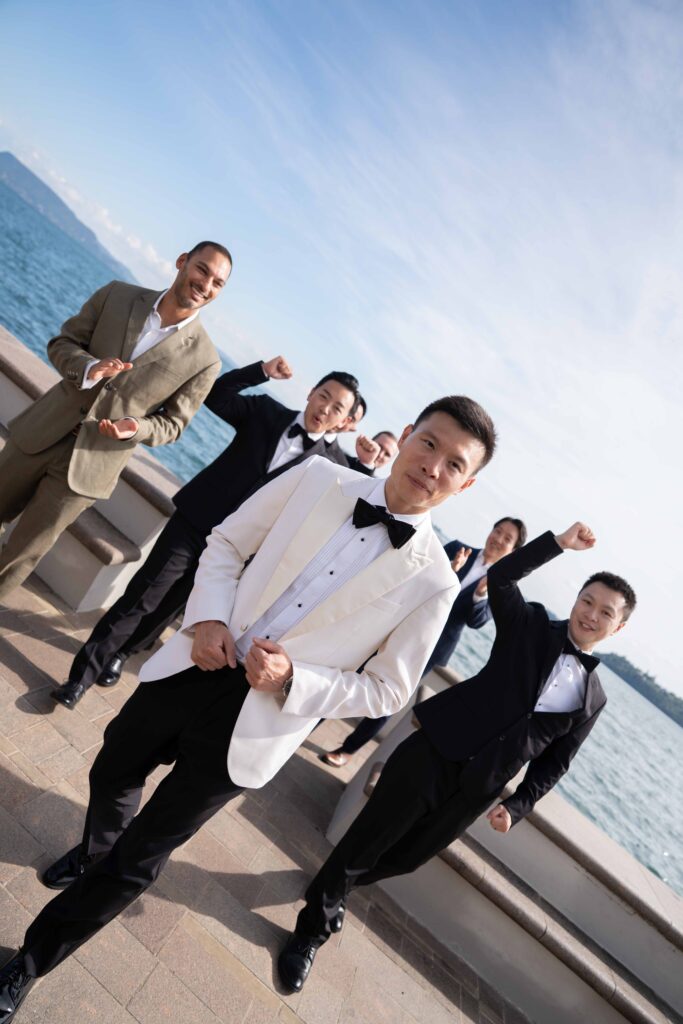
St Mark's Tower is a modern, minimalist alternative to the classic Lake Garda villas for a wedding in Italy. The venue boasts contemporary architecture, a prime waterfront location, and an intimacy often lacking in grand historic villas.
For couples planning to marry in Italy on Lake Garda and looking for a more modern, less classic concept, Torre San Marco is one of the strongest options in the region. The venue allows for a reduced, precise design – thereby creating images that stand out distinctly from the generic Lake Garda wedding aesthetic.
Borgo Egnazia — Structured perfection in Puglia
Borgo Egnazia is the most well-known and international wedding venue in Puglia – and for a wedding in Italy's southeast, it's the address to choose. The resort near Fasano combines Apulian architecture with world-class service and infrastructure.
What makes Borgo Egnazia so special for a wedding in Puglia is the structure. Everything works. The team is experienced, the processes are well-rehearsed, and the location has a capacity that can accommodate large international weddings. At the same time, this perfection brings with it a certain distance — Borgo Egnazia sometimes feels more like a luxury resort than an authentic Apulian estate. This is ideal for couples who prioritize precision over authenticity. For others, there are more intimate alternatives in Puglia.
Planning a wedding in Italy — what you need to know
Getting married in Italy as a foreign couple is fundamentally possible – but it involves a bureaucratic effort that should not be underestimated. This section provides an honest and practical overview of everything planning couples need to know.
Legal Basis — Civil Marriage Ceremony in Italy
Italy is a member of the EU, which generally makes a legally valid wedding in Italy simpler for German couples than in Switzerland. A civil marriage in Italy is recognised in Germany. At the same time, the bureaucratic process in Italy is complex and varies regionally – each municipality has its own responsibilities and requirements.
For German couples, marrying in Italy means a civil ceremony: birth certificates with apostille, certified translations, and contacting the relevant municipality (Comune) often months in advance. The lead time for documents should be at least six months, preferably more.
Many couples planning to marry in Italy decide to combine a civil ceremony in Germany beforehand with a celebrant-led ceremony in Italy. This is the most common solution in practice – it provides complete creative freedom for the ceremony without the bureaucratic requirements of a foreign wedding.
How early should you start planning
At the most sought-after wedding venues in Italy – Villa del Balbianello, Isola del Garda, Conti di San Bonifacio, Borgo Egnazia – the most popular dates are often booked up two years in advance. Anyone planning to get married in Italy at one of these addresses should start their venue search immediately after deciding on the destination.
Lesser-known locations and regions such as Sardinia, Sicily or the Wachau often offer more flexibility – good options are still available here with twelve to eighteen months' notice. For the classic regions of Tuscany, Lake Como and Lake Garda, the more specific the location idea, the earlier you need to book.
Destination Wedding Italy — with or without a wedding planner
An Italian wedding planner is essential in most cases for a destination wedding from abroad. The supplier landscape in Italy varies greatly by region, the quality differences are considerable, and without a local network, it's virtually impossible to find the right partners.
Added to this is the language barrier. In many parts of Italy – particularly in Puglia, Sicily, and more remote parts of Tuscany – English is not a given means of communication. An experienced wedding planner in Italy bridges this gap, ensuring that all service providers understand what is expected – and what is not.
The best time of year for a wedding in Italy
Getting married in Italy is possible from April to October – giving Italy the longest wedding season of all European destinations. However, not every season suits every region, and not every season creates the same atmosphere. Those planning to get married in Italy should consider the season and region together.
Spring – the underrated window
April and May are the strongest months for photography and atmosphere in many regions of Italy – and at the same time the most underestimated. Tuscany is in bloom. The Amalfi Coast is not yet overcrowded. Sicily and Puglia have pleasant temperatures, not oppressively hot. And the light – clearer, fresher, less heavy than in midsummer – creates images of a quality that is barely replicable in July.
Getting married in Italy in the spring means: fewer tourists, more availability for venues, lower prices in many areas, and a freshness that gives the wedding an energy that is missing in the summer. The only limitation: the weather is less reliable in spring than in summer. A Plan B for rain is essential for a wedding in Italy in April or May.
Early summer and early autumn — the main season
June and September are the most popular months for a wedding in Italy – and for good reason. The weather is reliable, the temperatures are pleasant, and the landscape is at its most beautiful. June brings long daylight hours and warm evenings. September brings golden colours, cooler nights, and a tranquillity that is particularly welcome after the peak summer rush.
For most regions of Italy, September is the best month for a wedding. The light is warmer than in early summer, the tourists dwindle, and the evenings are pleasantly cool and long. For a wedding in Tuscany, Lake Garda, or Puglia, September is the month most recommended by experienced couples and service providers.
High summer — heat, light, and restrictions
July and August are realistically the most challenging months for a wedding in Italy. Temperatures of 35 to 40 degrees Celsius in many regions, harsh midday light that is difficult for photography, and tourist numbers that reach their limit in popular regions like Tuscany or Lake Como.
This doesn't mean that a wedding in Italy in July or August won't work – but it does require more planning. Outdoor events at midday should be avoided. The schedule needs to be organised around the cooler hours of the early morning and evening. And the visual style is different: harder, more contrasting, less soft than in spring or autumn.
What works particularly well for a wedding in Italy in the height of summer: long evenings, warmth that lasts late into the night, and the atmosphere that arises when fairy lights are switched on and the wine continues to flow, while other countries are already in darkness.
Winter in Italy – for the right regions
Winter is the most underrated season for a wedding in Italy for Sicily, Puglia and Rome. Temperatures are mild – in Puglia and Sicily they are often still around 15 degrees in December and January. Locations are empty, the atmosphere is calm, and the seclusion has a quality that doesn’t exist in summer.
Getting married in Italy in winter is for couples seeking originality. A wedding in Sicily in December, a wedding in Puglia in January — these are experiences that are completely different from the typical summer wedding. Fewer tourists, better availability, often lower prices, and an atmosphere that is deeper and more intimate than in mid-summer.
A realistic estimate of the cost of a luxury wedding in Italy
The question of costs is central to any wedding planning in Italy – and it's the one answered most rarely and honestly online. This section provides a realistic overview without fantastical figures and without downplaying the expense.
Budget framework per region
Italy is cheaper than Switzerland and in many regions also cheaper than France - but in the luxury segment, a wedding in Italy is still a significant investment. The most expensive regions are Lake Como and the Amalfi Coast, where venue hire, catering and services are at a level that is hardly inferior to Switzerland's.
For a luxury wedding in Italy on Lake Como or the Amalfi Coast for fifty to one hundred guests and a multi-day programme, realistic overall budgets are between €100,000 and €300,000. In Tuscany and on Lake Garda, comparable weddings tend to be between €80,000 and €200,000. Puglia and Sicily are the more accessible regions – luxury weddings in Italy of similar quality can often be realised here for €60,000 to €150,000.
Where budget really makes an impact for a wedding in Italy
The most important insight for all luxury weddings also applies to a destination wedding in Italy: it's not the overall budget that determines the quality, but the allocation. A wedding in Italy planned precisely with a medium budget will appear more impressive than one with a large budget but no clear concept.
Light timing, workflow planning, the conscious design of transitions — these decisions cost little to nothing, but change the entire impact of a wedding in Italy. An experienced photographer who understands Italian light, who knows how to read historic architecture and how to use the moment just before sunset, makes more of a difference than any additional decorative element.
Hidden costs at a wedding in Italy
A wedding in Italy has some cost factors that often surprise foreign couples. The comune fees for civil ceremonies vary greatly and can be significant in sought-after locations such as Bellagio or Positano. In addition, there are exclusivity fees at certain venues, which are charged in addition to the room hire.
Travel expenses for German-speaking service providers are another factor. Anyone booking a German or Austrian photographer, videographer, or hair and makeup artist for a wedding in Italy will have to pay for travel, accommodation, and often daily rates. This is worth it for the right service providers – but it needs to be factored in.
Wedding Planner Italy — why they are indispensable
One Wedding Planner Italy is not a matter of convenience for a destination wedding abroad, but a structural necessity. The complexity of a wedding in Italy — an unknown supplier landscape, language barriers, regional specificities, bureaucratic requirements — exceeds what most couples can sensibly manage without professional support.
What makes a good wedding planner in Italy
A good wedding planner in Italy demonstrates their quality not through pictures, but through consistency. Their weddings don't look good by chance – they follow a clear thread, regardless of the venue, region, or number of guests. The local network is crucial: anyone planning a luxury wedding in Italy needs a planner who works with the best florists, caterers, musicians, and photographers in Italy.
Another crucial point is regional specialisation. A wedding planner who is excellent in Tuscany isn't necessarily the right choice for a wedding in Puglia. Those planning to marry in Italy should be sure to choose a planner who truly knows the chosen region – inside out.
What a wedding planner in Italy costs
An experienced wedding planner in Italy typically works with a percentage of the total budget—between ten and fifteen percent—or with a fixed project fee. For a wedding in Italy with a total budget of 150,000 euros, this means a planner's fee of approximately 15,000 to 22,000 euros.
In the context of a destination wedding in Italy, that's not an unreasonable amount. A good planner reduces mistakes, optimises the budget and ensures that the ease which a wedding in Italy is meant to embody is actually palpable – and doesn't disappear behind visible organisation.
Getting married in Italy as a destination wedding — what you can offer your guests
Getting married in Italy is not just a decision for the couple – it's a decision for the guests. A destination wedding in Italy offers guests an experience that goes far beyond a single wedding day. This is what motivates many couples: to give their guests not just a celebration, but an experience.
Arrival and accessibility for international guests
Italy is one of the most accessible countries in Europe. Milan, Rome, Venice, Florence, Naples, Bari, Palermo — Italy has more international airports than almost any other European wedding destination. For guests from Germany, Austria, and Switzerland, most regions of Italy are reachable within two to three hours by plane or train.
Accessibility varies significantly by region. Lake Como is accessible in under an hour from Milan Airport. Tuscany has two well-connected airports in Florence and Pisa. Puglia is accessible via Bari or Brindisi Airport, with direct connections from many German cities. The Amalfi Coast is accessible via Naples, offering two airport options for guests from Northern Europe.
Framework programme and multi-day weddings in Italy
A destination wedding in Italy unfolds its full potential over several days. Wine tastings at Tuscan vineyards, boat trips on Lake Como or Lake Garda, city tours in Florence or Rome, cooking classes with local producers, excursions to coasts and beaches — Italy offers a natural supporting programme for every region and every season.
Anyone planning a wedding in Italy and structuring a welcome dinner, wedding day, and farewell brunch gives their guests three complete experiences. The welcome dinner could be an evening at a vineyard, a boat trip on the lake, or dinner in a historic city palace. The farewell brunch takes place on a terrace with a lake view or an olive grove view.
This structure – and the ease with which it can be implemented in Italy – is one of the strongest arguments for a destination wedding in Italy over other wedding destinations. Italy makes multi-day celebrations simple. The foundations – good food, beautiful scenery, warm evenings – are already in place.
Conclusion: For whom marriage in Italy is the right decision
Getting married in Italy is one of the most powerful decisions for the right couples. No other European country combines light, architecture, cuisine, and a sense of life in this way – and no other country makes it so easy to celebrate a wedding that doesn't feel like an event, but like an experience.
What makes a wedding in Italy so special in the long run is the self-evidence. The quality isn't fought for – it's simply there. The light falls as it falls. The food is good because the ingredients are good. The atmosphere arises because the place allows it. A wedding in Italy doesn't feel special because it's well-planned – it feels special because it takes place in a location that's made for it.
For couples planning a luxury destination wedding in Italy, choosing the right region is the crucial first step. Tuscany, Lake Como, Lake Garda, the Amalfi Coast, Puglia, Sicily, Rome, Venice, Sardinia, or Capri – each region has its own identity and is suited to different concepts and different couples. Those who make this decision consciously and choose a location that truly fits their own vision lay the foundation for a wedding in Italy that will have a lasting impact.
Getting married in Italy is worthwhile for couples who prioritise atmosphere over spectacle. They understand that a wedding is not created by maximum decoration, but by the right combination of location, light, and flow. They want to give their guests not just a celebration, but an experience — an evening that feels different from all other evenings, and therefore remains in their long-term memory.
A wedding in Italy, properly planned, needs no justification. It speaks for itself.